



What Ecommerce SEO Audit Services Include and What to Expect
Most ecommerce stores have a traffic problem they cannot diagnose. The products are good, the website looks clean, and the team has published content consistently. Yet the organic rankings sit on page two, conversion rates are modest, and every month feels like running to stand still. The issue is almost always structural, and it can only be found by pulling apart the site from the inside out.
That is what ecommerce SEO audit services are for. A proper audit identifies the technical, content and authority issues keeping your store off the keywords your customers actually use, and it says what to fix and in what order.

What Is an Ecommerce SEO Audit?
An ecommerce SEO audit is a full analysis of how an online store performs in search. It examines the technical health of the site, the on-page optimisation of product and category pages, the site architecture, the content strategy, the internal linking structure, and the backlink profile. The goal is to identify every factor that is preventing the site from ranking as highly as its products and commercial intent deserve.
Ecommerce sites face a different set of SEO challenges compared to blogs or service websites. They typically have hundreds or thousands of pages that need to be crawlable and indexable. They generate duplicate content through product variants, filtered URLs, and pagination. They have faceted navigation systems that can create crawl traps for search engine bots. Their category and product page templates need to be optimised at scale. And they compete against marketplaces with far greater domain authority, which means every technical and content advantage matters.
A professional ecommerce SEO audit surfaces these issues systematically and prioritises them by their likely impact on organic traffic and revenue.
What Does an Ecommerce SEO Audit Service Include?
What agencies include under the label of an SEO audit varies a lot. A credible ecommerce SEO audit service will cover the following areas in depth.
Technical SEO Analysis
Technical SEO is the foundation. If search engines cannot crawl and index your pages efficiently, nothing else matters. A thorough technical audit examines crawl accessibility, indexation status, site speed, Core Web Vitals, mobile performance, HTTPS implementation, structured data, canonical tags, redirect chains, XML sitemaps, and robots.txt configuration.
Crawl issues are particularly damaging for ecommerce sites. Faceted navigation, product filtering systems, and URL parameter handling can generate enormous numbers of near-duplicate URLs that waste crawl budget and dilute the authority of your core pages. A technical audit uses a site crawl tool alongside Google Search Console data to identify exactly where crawl budget is being wasted and which pages Google is failing to index.
Core Web Vitals are now confirmed ranking signals, and ecommerce sites frequently underperform on them due to large product image libraries, third-party scripts, and heavyweight theme frameworks. The audit should report LCP (Largest Contentful Paint), INP (Interaction to Next Paint), and CLS (Cumulative Layout Shift) scores at both site-wide and page level.
Structured data and schema markup are particularly valuable for ecommerce. Product schema, review schema, breadcrumb schema, and offer schema enable rich results in Google’s search listings, including star ratings, price, and stock status. Rich results raise click-through rates on product queries. A technical audit will identify which pages are missing schema and which schema implementations contain errors.
On-Page Optimisation Review
On-page SEO for ecommerce covers the elements on each page that signal relevance and quality to search engines and users alike. The audit reviews title tags, meta descriptions, heading structures, keyword placement, content depth, and URL structures across the key page types: the homepage, category pages, subcategory pages, product pages, and blog content.
Category pages matter more than any other page type for most ecommerce stores. They target the broad commercial keywords that represent the highest search volume in most niches. Yet they are frequently under-optimised, with thin content limited to a page title and a product grid. A strong audit identifies every category page that lacks sufficient content, has missing or duplicate title tags, or targets the wrong keyword intent.
Product pages need individual attention for flagship and high-margin products and template-level optimisation for the broader catalogue. The audit examines whether product descriptions are original or copied from manufacturer specifications (a widespread duplicate content issue), whether title tags differentiate between similar products, and whether structured data is implemented correctly.
Site Architecture and Internal Linking
The way an ecommerce site is structured fundamentally affects how PageRank flows through it and how clearly search engines understand the relationship between pages. A flat architecture, where important pages are accessible within a small number of clicks from the homepage, is consistently associated with stronger ranking performance.
The audit maps the current architecture and identifies pages that are buried too deep in the hierarchy, categories that are not linked to prominently enough from the homepage and navigation, and product pages that exist in orphaned sections with no internal link equity flowing to them. It also examines internal link anchor text to confirm that it is descriptive and contextually appropriate rather than generic.
For larger catalogues, the audit will assess how well the internal linking reinforces topical clusters and whether the category structure matches the keyword landscape that shoppers are actually using.
Content Gap Analysis
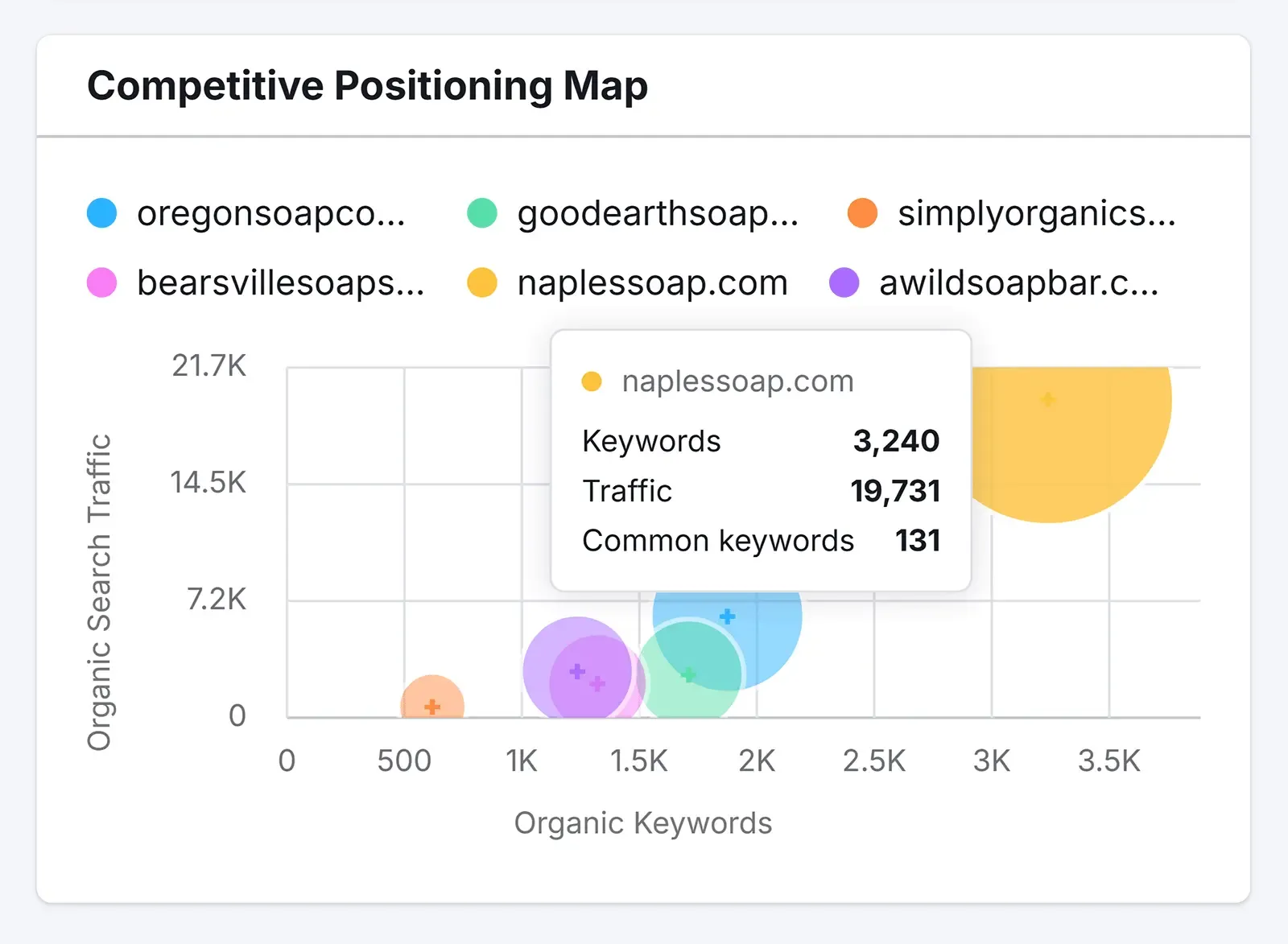
Many ecommerce stores rank well for branded and product-specific queries but have almost no visibility for the informational and commercial investigation queries that come earlier in the buying process. A content gap analysis identifies the keywords your target customers are searching for in which you have no content or ranking presence.
This covers both category and product-level keyword gaps and the broader content opportunities in the blog. Informational content that answers product questions, compares options, and guides purchasing decisions drives significant organic traffic and builds the topical authority that helps the commercial pages rank better in turn.
The gap analysis uses competitor URL data to identify where competing stores are ranking for keywords you are not, and maps these to content opportunities in order of traffic potential and commercial relevance.
Backlink Profile Assessment
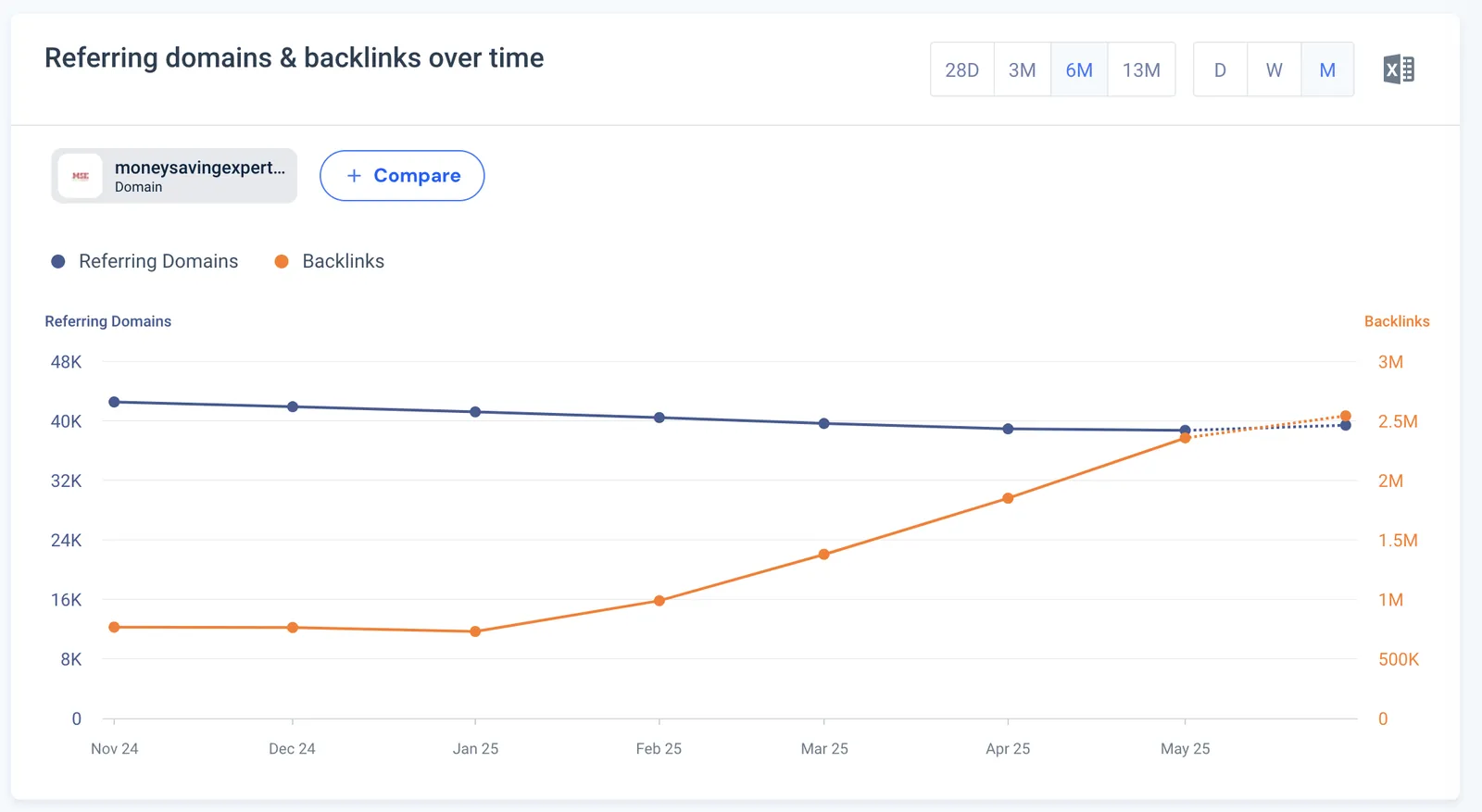
A backlink audit reviews the quality, relevance, and diversity of the links pointing to the site. For ecommerce, this covers the domain-level link profile as well as the distribution of links across key category pages, which are often neglected in favour of the homepage.
The audit identifies toxic or spammy links that may be suppressing rankings and should be disavowed. It also benchmarks the link profile against direct competitors to reveal the authority gap that needs to be closed through outreach and digital PR.
Competitor Benchmarking
Where your site sits relative to the sites competing for the same keywords sets both your expectations and your order of work. The audit benchmarks key metrics including domain authority, topical coverage, backlink quantity and quality, page speed, and content depth against the top three to five competitors in your space.
The benchmark shows which gaps you can realistically close and what it would cost to compete for your most important keywords.
Why Generic SEO Audits Fall Short for Ecommerce
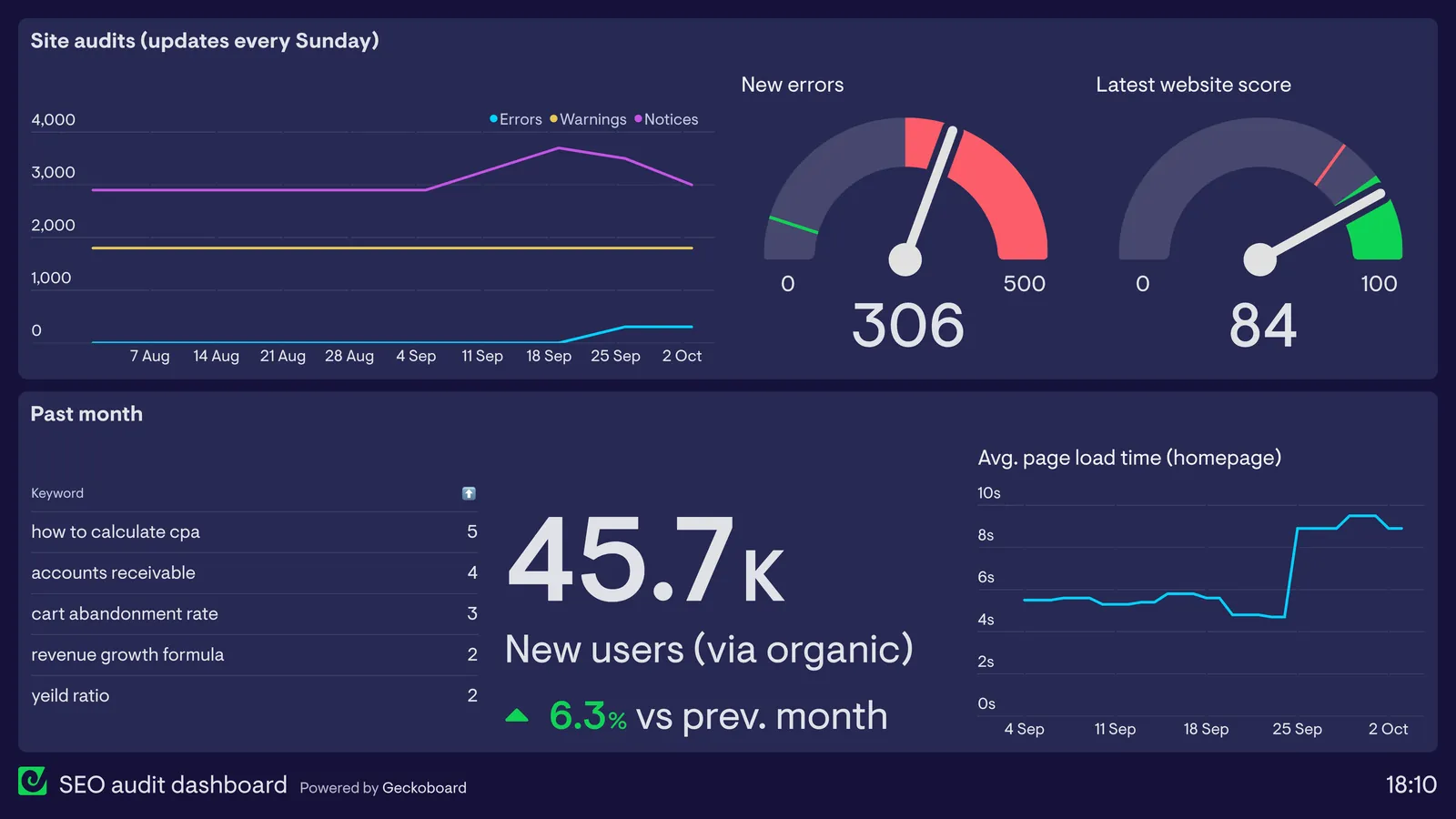
A template-based audit that runs a site through an automated tool and outputs a report is not an ecommerce SEO audit service. It is a technical scan. The two are not the same thing.
Ecommerce SEO requires understanding the specific dynamics of shopping sites. A generic audit will flag thin content on product pages without recognising that the solution is a combination of template-level optimisation and targeted content expansion rather than rewriting ten thousand product descriptions individually. It will identify duplicate content without understanding whether the cause is faceted navigation, pagination handling, or product variants, and therefore without providing the right solution.
It will also miss the commercial intent layer entirely. Ranking for product-related keywords means knowing which keywords your customers use from first research to checkout, which page type suits each keyword, and how the content needs to be structured to catch traffic across the full funnel.
A credible ecommerce SEO audit service is delivered by people who understand how ecommerce sites work, not by a reporting tool.
How Often Does an Ecommerce Store Need an SEO Audit?
A full technical and strategic audit should be conducted at least once every twelve months, and immediately in any of the following circumstances.
After a major algorithm update: If organic traffic has dropped significantly following a confirmed Google algorithm update, an audit helps identify which aspects of the site triggered the decline and what needs to change.
Before and after a platform migration: Moving from Magento to Shopify, WooCommerce to BigCommerce, or any equivalent change creates significant risk of ranking loss. A pre-migration audit establishes the baseline and identifies the elements that have to be preserved. A post-migration audit confirms what has been retained and what needs to be remedied.
Before a paid search campaign: Investing in PPC to a site with unresolved technical SEO issues and poor landing page quality is expensive. Fixing the organic performance first makes the paid spend significantly more efficient.
When organic traffic has been declining consistently: A steady multi-month decline in organic traffic is rarely a single-issue problem. A comprehensive audit is the most efficient way to identify whether the causes are technical, content-related, authority-related, or a combination of all three.
What to Expect When You Commission an Ecommerce SEO Audit
A professional ecommerce SEO audit service should deliver a clear, prioritised action plan, not a document that requires a second agency to interpret. Here is what the process typically looks like.
Discovery and access. The agency needs access to Google Search Console, Google Analytics or GA4, and ideally a crawl of the full site. This is the raw data layer from which all analysis follows.
Audit period. A thorough ecommerce SEO audit takes two to four weeks depending on the size of the catalogue and the complexity of the site architecture. Be cautious of any service that promises a full audit within 24 to 48 hours. Speed at that level means automation without analysis.
Deliverable. The output should be a structured report covering each audit area with findings, the likely impact of each issue, and specific recommendations. High-impact, low-effort fixes should be clearly separated from longer-term strategic priorities.
Presentation and walkthrough. For a document this detailed to be genuinely useful, the agency should walk your team through the findings, explain the rationale behind the prioritisation, and answer questions. A report delivered without a walkthrough leaves you to interpret it on your own.
Implementation support. Some agencies include implementation support as part of the audit package. Others deliver the audit as a standalone service and offer a separate retainer for implementation. Both models can work, but know which one you are buying before you commit.

How to Choose the Right Ecommerce SEO Audit Service
The quality of SEO audit services varies enormously. When evaluating agencies, these are the markers of a credible provider.
They ask detailed questions before quoting. An agency that can quote a fixed price for an ecommerce SEO audit without knowing the size of the catalogue, the platform, the history of algorithm changes, or the existing technical setup is not planning to do thorough work.
They show examples of previous audit deliverables. You do not need to see a full audit from another client, but you should be able to see the format, the depth, and the structure of what they produce. A sample report tells you more about an agency’s approach than any sales conversation.
They can explain their methodology. What crawl tools do they use? How do they approach faceted navigation analysis? How do they prioritise recommendations? A team that cannot answer these questions specifically is unlikely to produce an audit that goes beyond automated outputs.
They have ecommerce-specific experience. General SEO agencies can produce adequate audits for most site types, but ecommerce has enough specific complexity, particularly around technical architecture, category-level optimisation, and product schema, that specialist experience produces materially better outcomes.
Frequently Asked Questions
What is the difference between an SEO audit and ongoing SEO services?
An SEO audit is a one-time diagnostic assessment that identifies what is wrong and what needs to change. Ongoing SEO services implement those changes, build authority over time, create new content, and monitor performance continuously. An audit is the logical starting point for any serious SEO engagement because it ensures that ongoing work is targeted at the right issues.
How much do ecommerce SEO audit services cost?
Pricing varies depending on the scope and scale of the engagement. For a small to medium ecommerce store, a professional audit typically costs between €1,500 and €5,000. Larger catalogues with complex technical architectures will attract higher fees. Avoid audits priced below €500 as they are almost certainly automated reports rather than genuine analysis.
Can I do an ecommerce SEO audit myself?
Basic technical checks using tools like Google Search Console, Screaming Frog, and PageSpeed Insights are accessible to any store owner willing to invest the time. However, interpreting the results correctly, prioritising the issues by commercial impact, and understanding the ecommerce-specific nuances of faceted navigation, duplicate content handling, and schema implementation requires expertise that takes years to develop. An experienced agency will identify issues that a self-audit will miss.
How long does it take to see results after fixing SEO audit findings?
Technical fixes, such as resolving crawl errors, implementing canonical tags, and improving page speed, can produce measurable improvements within four to eight weeks. Content and authority-building work takes longer, typically three to six months before significant ranking gains become visible. The timeline depends heavily on the competitiveness of your target keywords and the starting state of the site.
Book an Ecommerce SEO Audit
If your ecommerce store is not getting the organic traffic its product range deserves, an audit will tell you why. Bubblehub audits Irish and UK online stores and reports what is working, what is not, and what has to change.
We cover technical SEO, on-page optimisation, site architecture, content gaps and backlink profile, and hand it over with a prioritised action plan and a walkthrough of the findings. None of it comes out of an automated report.
Get in touch to talk through what an audit would cover for your store.
Published by Bubblehub Media. We are a digital marketing agency based in Drogheda, Co. Louth, specialising in SEO, PPC, and web design for Irish and UK businesses.