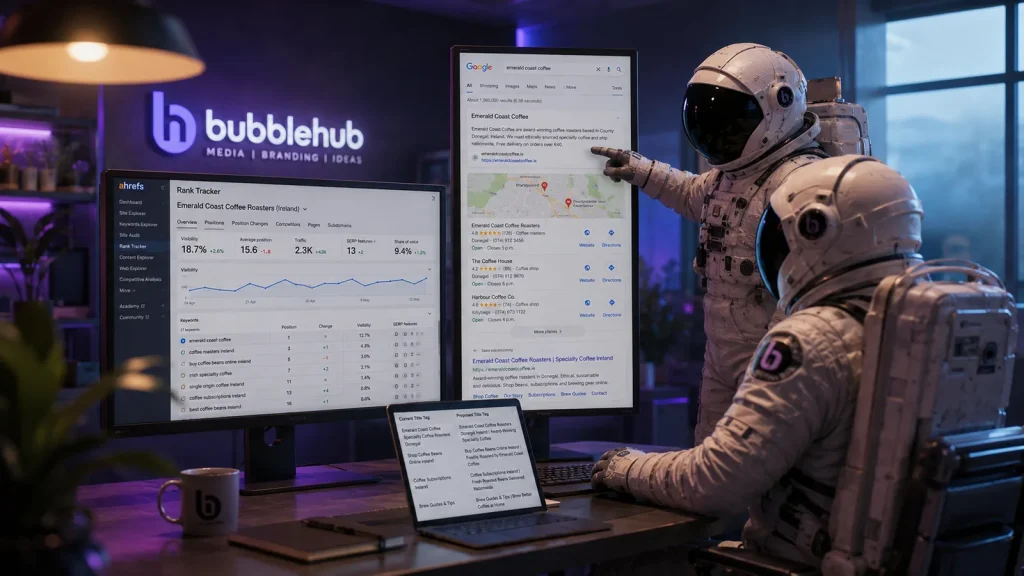



Understanding SEO and Why Ecommerce SEO is Important
Irish consumers keep moving their buying online. Irish online retail spending continues its strong upward trend.
That growth brings competition with it. Having an online store is no longer enough on its own, because a buyer only sees what ranks. That is the job of strategic, ongoing Search Engine Optimization (SEO).
For any ecommerce business in Ireland, SEO is important. It decides whether a customer searching for what you sell finds your e-commerce website or somebody else’s. 80% of Irish e-commerce retailers cite organic traffic as their top source of new customers, ahead of paid ads and social referrals.
Understanding why SEO is important for e-commerce is where sustainable online growth starts. At Bubblehub we have spent over 12 years building websites for Irish businesses and running ecommerce SEO strategies for them.
1. Why SEO Decides Whether Your Shop Gets Found
Search engines are where online shoppers start. Globally, 68% of all online experiences start with a search engine, so an online store that cannot be found there is in trouble before it opens.
- The Primacy of Page One: Over 90% of searchers never click past the first page of Google search results. For 39% of Irish SMEs, ranking on Google’s first page is their top digital priority for 2025, highlighting the perceived importance of SEO.
- Targeting Buyer Intent: Understanding why someone is searching is key for effective SEO. Good SEO helps you appear for:
- Informational Searches: “best waterproof jackets Ireland” (Early stage research – attract with content marketing)
- Commercial Investigation: “compare [Brand A] vs [Brand B] hiking boots” (Mid-stage comparison – requires detailed product information)
- Transactional Searches: “buy [Specific Product Name] online Dublin” (Ready to purchase – optimise product pages)
Practical Steps: Effective Ecommerce Keyword Research for SEO
Solid ecommerce keyword research is the foundation of any successful SEO campaign.
- Tools: Utilise an SEO tool like Google Keyword Planner, SEMrush, Ahrefs, or Ubersuggest.
- Analyse Intent: Categorise keywords based on buyer intent to tailor content appropriately.
- Long-Tail Focus: Target specific, longer phrases (e.g. “handmade leather crossbody bag Ireland”) which often have lower competition and higher conversion rates for ecommerce sites.
- Competitor Analysis: See what keywords successful Irish competitors rank for to inform your own SEO strategies.
- Map Keywords: Assign target keywords strategically to relevant pages on your site, including homepage, category, and product pages.
2. How SEO Brings You Buyers Rather Than Browsers
SEO attracts visitors actively looking for your products, leading to better engagement. Organic search drives 53% of all website traffic, making it a primary source for acquiring potential customers.
- Relevance is Key: SEO focuses on attracting users with genuine interest, leading to better engagement metrics which search engines value.
- User Experience (UX) Matters: Google rewards sites offering a good user experience. Factors improved through professional web design and development, such as intuitive navigation and fast load times, are part of SEO best practice. A good experience signals quality.
Practical Steps: Improving Site Structure & UX for Ecommerce SEO
Site structure and user experience are on-page SEO.
- Logical Navigation: Ensure intuitive menus and category structures guide both users and search engine crawlers effectively.
- Internal Linking: Link relevantly between pages (e.g. blog post to related product) to distribute authority and enhance navigation.
- Mobile Optimisation: The site has to work properly on a phone. Mobile usage accounts for about 65% of all site visits in Ireland, so a responsive ecommerce website is mandatory.
- Page Speed: Relentlessly optimise your website for speed.
- Clear Calls-to-Action (CTAs): Guide users towards purchase clearly.
3. The Part SEO Plays in Ecommerce Conversions
Traffic is only half of it. The visitor still has to buy. Approximately 70% of Irish online shoppers check multiple sites and read reviews before buying, so your ecommerce site has to be clear and has to look trustworthy.
- Optimised Product Pages: Clear information and social proof on each product page directly influence purchase decisions.
- Technical Health = Sales Health: Slow or broken elements lose sales instantly. Poor technical foundations affect your SEO negatively.
- Trust Through Credibility: High SEO rankings and a professional site build confidence.
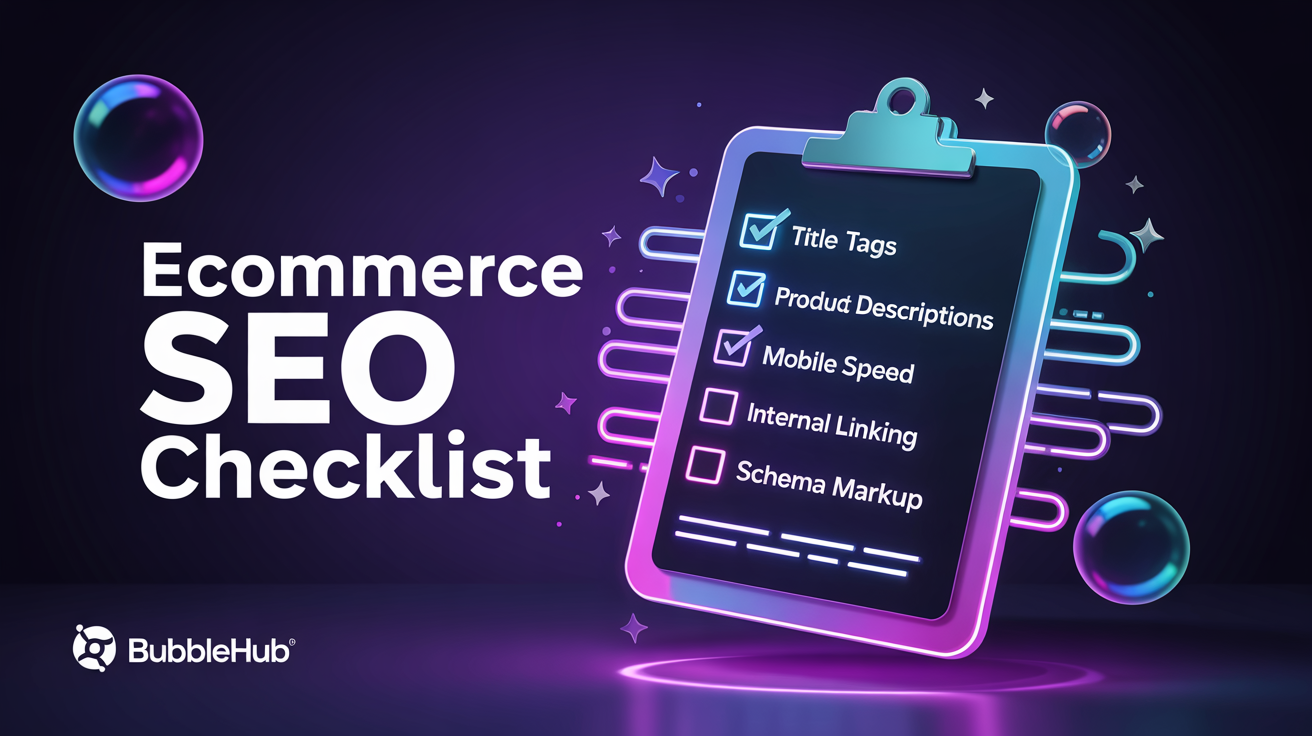
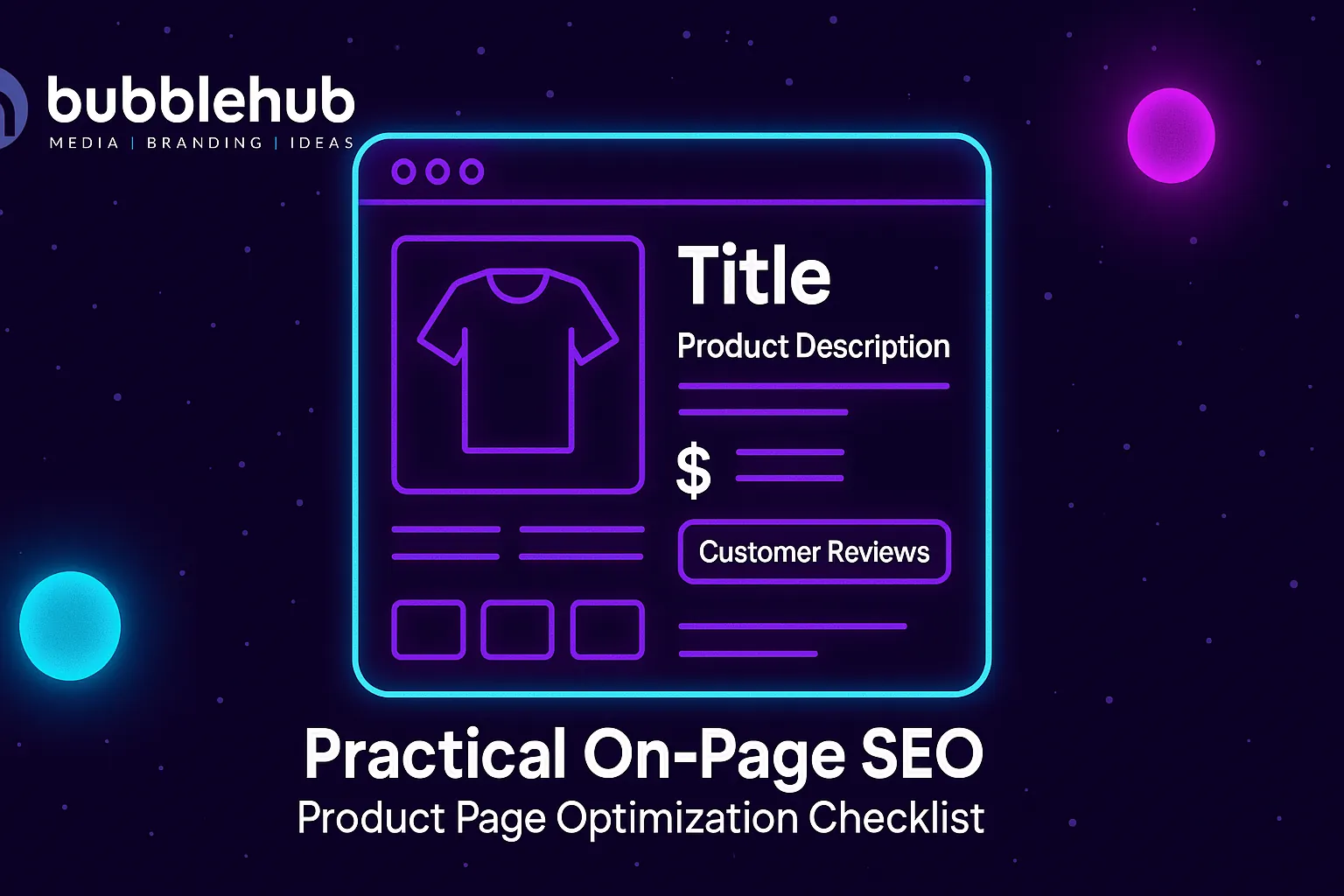
Practical On-Page SEO: Product Page Optimisation Checklist
Follow these best practices to create an optimised product page:
- Unique, Compelling Titles (with keywords)
- Detailed, Benefit-Oriented Product Descriptions (keywords naturally integrated)
- High-Quality Images/Video (optimised files, alt text describing the product or service)
- Clear Pricing & Availability
- Visible CTAs (“Add to Cart”)
- Customer Reviews/Ratings (social proof)
- Shipping & Returns Info
- Related Products
- Schema Markup (Product schema) – a key part of technical SEO for ecommerce.
4. Long-Term ROI From Ecommerce SEO
SEO builds lasting value for your ecommerce business. Ireland’s SEO spending among mid-sized companies rose by 25% in 2024, with a projected 15% increase in 2025, indicating businesses recognise the long-term benefits of SEO compared to channels like Pay Per Click marketing.
- Compounding Returns: SEO efforts build authority over time, delivering increasing returns.
- Cost-Effectiveness: Lower long-term cost per acquisition compared to PPC, helping to drive sales more efficiently.
- Brand Building: Establishes your brand as a trusted leader within the ecommerce industry.
- Market Intelligence: SEO data tells you what Irish consumers are actually searching for.

5. Technical SEO for an Ecommerce Site
An ecommerce site that is technically broken will not rank and will not convert. Effective ecommerce search engine optimisation rests on a sound technical base.
Site Speed Optimisation
- Why: Slow sites kill conversions. Each second above a 3-second load time can reduce conversions by about 12%. Speed is a ranking factor in its own right.
- Tools: Use Google PageSpeed Insights, GTmetrix.
- Techniques: Compress images (use tools like TinyPNG), enable browser caching, minimise code, use fast Irish hosting, consider a CDN. Core Web Vitals compliance among Irish websites was only around 40% in mid-2024, showing significant room to improve SEO.
Mobile-First Optimisation
- Why: Google indexes the mobile site first. 65% of Irish site visits are mobile. A poor mobile experience severely harms your overall SEO.
- Techniques: Responsive design, large tap targets, simple mobile navigation. Ensure your website is optimised for mobile viewing.
Secure Browsing (HTTPS)
- Why: Trust, data encryption, and a lightweight ranking signal. Mandatory for checkouts on any credible online store.
- Action: Ensure site-wide HTTPS via an SSL certificate.
Structured Data (Schema Markup)
- Why: Helps search engines understand content and enables rich snippets such as ratings and price, which is how a product page stands out in the results.
- Implementation: Use
Product,Review,FAQPage,BreadcrumbListschema. Validate with Google’s Rich Results Test.
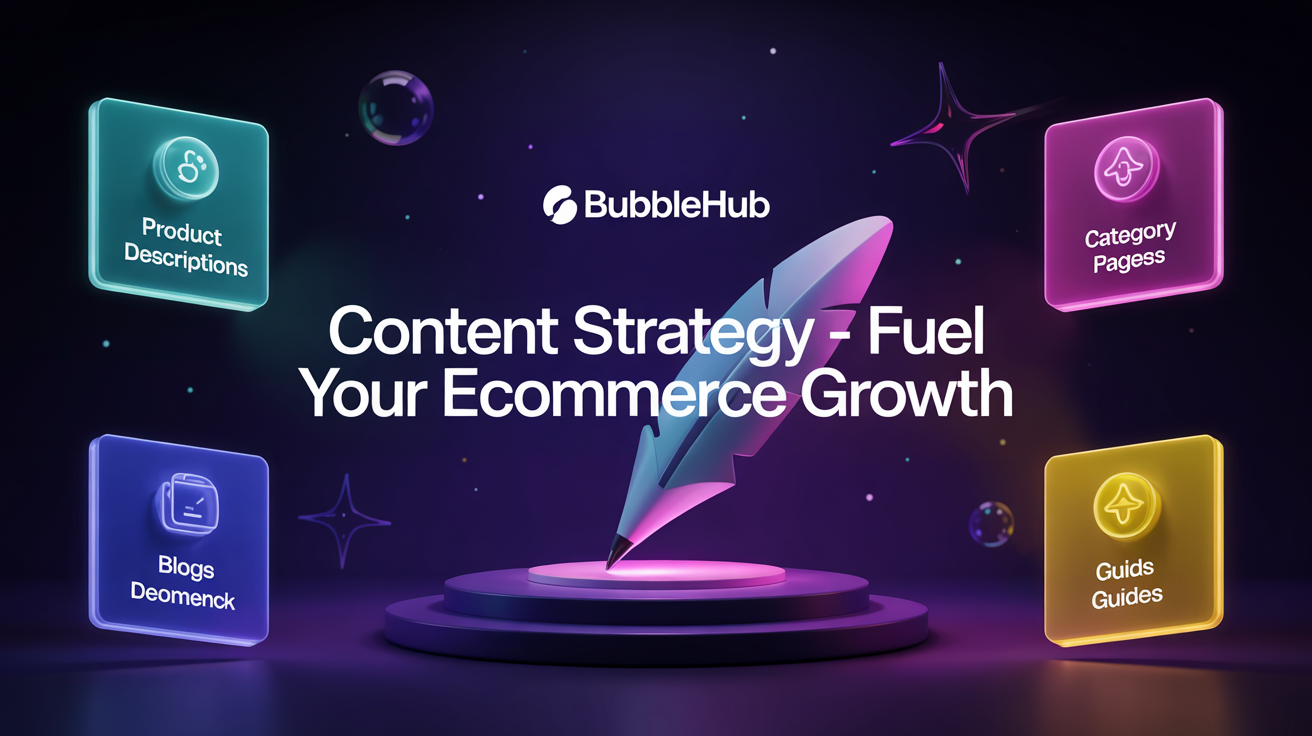
6. Crafting an Effective Ecommerce Content Strategy for SEO
Content fuels SEO and guides customers. A strong content strategy is part of ecommerce marketing. There is more on the Bubble Blog.
- SEO-Driven Product Descriptions: Write unique, engaging product descriptions focusing on benefits, using keywords naturally. Avoid generic manufacturer text to prevent duplicate ecommerce content issues. (Especially important for platforms like Shopify – see our Shopify SEO checklist).
- Category Page Optimisation: Add introductory text to category pages explaining the range and offering buying advice.
- Blogging & Guides for Informational Keywords: Embrace content marketing. Create helpful content (how-tos, guides, comparisons) targeting early-stage buyers. Link internally to products/services.
7. Local SEO Strategies for Irish Ecommerce Reach
Local SEO matters most for an ecommerce business with a physical outlet or a defined service area. 46% of all Google searches have local intent, and 77% of Irish consumers research local businesses online weekly. How Local SEO affects rankings covers the mechanics.
- Google Business Profile (GBP) Optimisation: Claim, verify, and fully complete your profile with accurate NAP, hours, services, photos. Encourage and respond to reviews. Use Posts regularly (does posting help SEO?). 58% of Irish consumers use “near me” searches daily, which is why the profile has to be right.
- Irish Citations & Directories: Ensure consistent NAP on Golden Pages, Yelp.ie, local directories.
- Regional Targeting: Use location keywords (” Cork,” ” Galway”). Consider dedicated pages if targeting specific areas like Web Design Dublin or Web Design Cork.
8. Addressing Common Ecommerce SEO Challenges on Your Website
Specific ecommerce hurdles require tailored SEO solutions.
- Duplicate Content: Use canonical tags (
rel="canonical"). Write unique descriptions. Handle faceted navigation parameters carefully to avoid diluting SEO value. - Out-of-Stock Products: Indicate status clearly. Offer alternatives or notifications. 301 redirect discontinued product URLs appropriately to preserve link equity.
- Seasonal Optimisation: Plan content and promotions ahead. Update pages seasonally. Analyse past trends to anticipate demand swings in the ecommerce industry.
9. Current SEO Trends for Ecommerce in 2025
SEO changes every year, and keeping up with it is part of maintaining ecommerce SEO performance.
- Voice Search: Optimise for conversational queries. Voice search accounts for approximately 18% of mobile searches in Ireland, especially among younger users.
- AI & Search Evolution: Focus on high-quality, comprehensive content satisfying user intent and demonstrating E-E-A-T. AI helps search engines better understand context.
- Mobile-First Indexing: Ensure your mobile site is flawless, as it’s the primary version Google uses for indexing and ranking your ecommerce website.
- Visual Search: Use high-quality, well-optimised images with descriptive alt text.

10. Measuring Ecommerce SEO With Analytics and KPIs
Track progress to refine your SEO strategy and demonstrate ROI.
- Key Ecommerce SEO KPIs: Organic Website Traffic, Organic Conversion Rate, Organic Revenue, Keyword Rankings, Bounce Rate, Pages per Session. Organic traffic is often an important metric.
- Tools You Need:Google Analytics (with Ecommerce Tracking), Google Search Console. An SEO tool will show you more than either of them will on their own.
- Basic Setup: Ensure correct installation and goal/conversion tracking. Regularly review your SEO performance data.
11. Competitive SEO Analysis for Ecommerce Advantage
Understanding competitor SEO strategies reveals opportunities and threats for your online store.
- Why Analyse? Identify strengths/weaknesses, find keywords, discover content gaps, analyse backlink strategies (part of off-page SEO).
- Steps: Identify key Irish competitors. Analyse their keywords, site structure, content, and backlinks using an SEO tool (SEMrush, Ahrefs, Moz, Ubersuggest etc.).
12. Working With Bubblehub on Ecommerce SEO
Getting real results from ecommerce SEO takes people who know the Irish market. A solid SEO strategy helps you work out what to do first and what can wait.
Integrated Expertise: We build the sites and we do the SEO, so the technical side and the strategy are not two separate jobs handed to two separate firms. Learn more about us.
Ecommerce SEO FAQs
How long does SEO take to show results for an ecommerce site?
While some technical fixes offer quick wins, significant results from SEO efforts (higher rankings, increased traffic to your website, sales) typically take 4-12 months. SEO is a long-term strategy requiring patience and consistent effort. Factors like competition, site history, and budget influence the timeline for your ecommerce SEO.
How much should I budget for ecommerce SEO in Ireland?
Ecommerce SEO budgets vary widely based on business size, goals, competition level, and whether you use an agency or in-house resources. Costs can range from a few hundred euros per month for basic local SEO to several thousand for comprehensive strategies in competitive niches. Focus on the value and potential ROI, not just the cost. An initial audit (like Bubblehub’s free SEO offering) can help define needs and potential budget ranges for your SEO campaign. If your shop runs on off-the-shelf ecommerce software, the Grow Digital Voucher may pay half of it, though it pays for software, not for SEO.
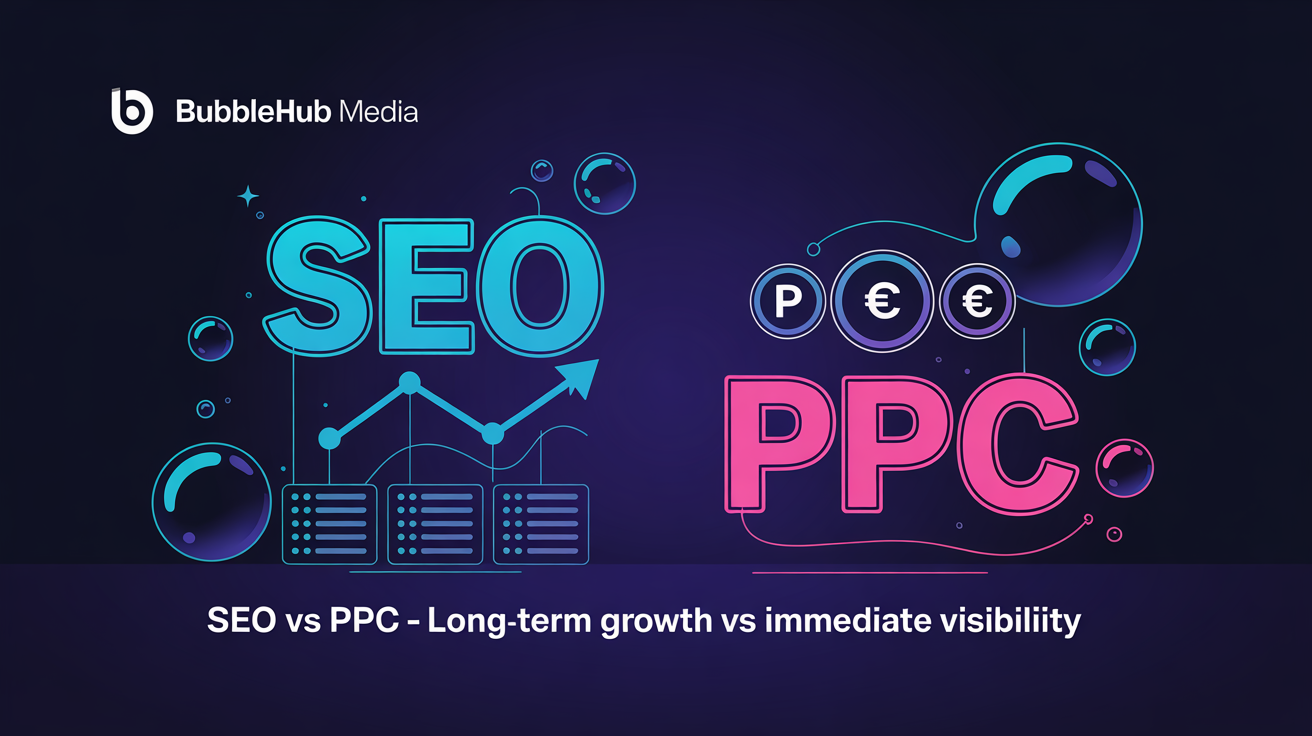
Is SEO better than paid ads (PPC) for ecommerce?
They serve different but complementary roles in digital marketing. SEO builds long-term, sustainable organic traffic with typically lower long-term cost per acquisition. PPC (like Google Ads or Facebook Ads) offers immediate visibility and is great for testing or promotions. Most ecommerce businesses run both. Read our comparison: Google Ads vs Facebook Ads.
The Reasons Why SEO is Important for Ecommerce Success
For an Irish ecommerce business, SEO is how people find you and how you stay found. It connects you with buyers who are already looking, it builds trust, and it keeps traffic coming without paying for every click. An effective SEO strategy covers both on-page SEO and technical SEO.

Get a Free SEO Audit for Your Irish Ecommerce Site
Bubblehub runs a Free Initial SEO Audit for Irish ecommerce businesses. We look at where your site stands now and tell you what would move first.
- Book Your Free Audit / Contact Us:https://www.bubblehub.ie/contact-us
- Call Us:(041) 986 5012
- Email Us:info@bubblehub.ie