



How to outrank competitors in AI search is the question Irish businesses are asking now. Search is no longer a list of ten blue links. More and more of it is an answer written by an AI at the top of the results page.
That AI summarises information, answers questions outright, and can recommend some brands over others. If your old SEO tactics are returning less than they used to, this may be part of why.
The work now has two sides. You still need to rank near the top of the traditional results, and you also need to be the source the AI engines quote. Both belong in an AI SEO strategy.
AI SEO vs. GEO
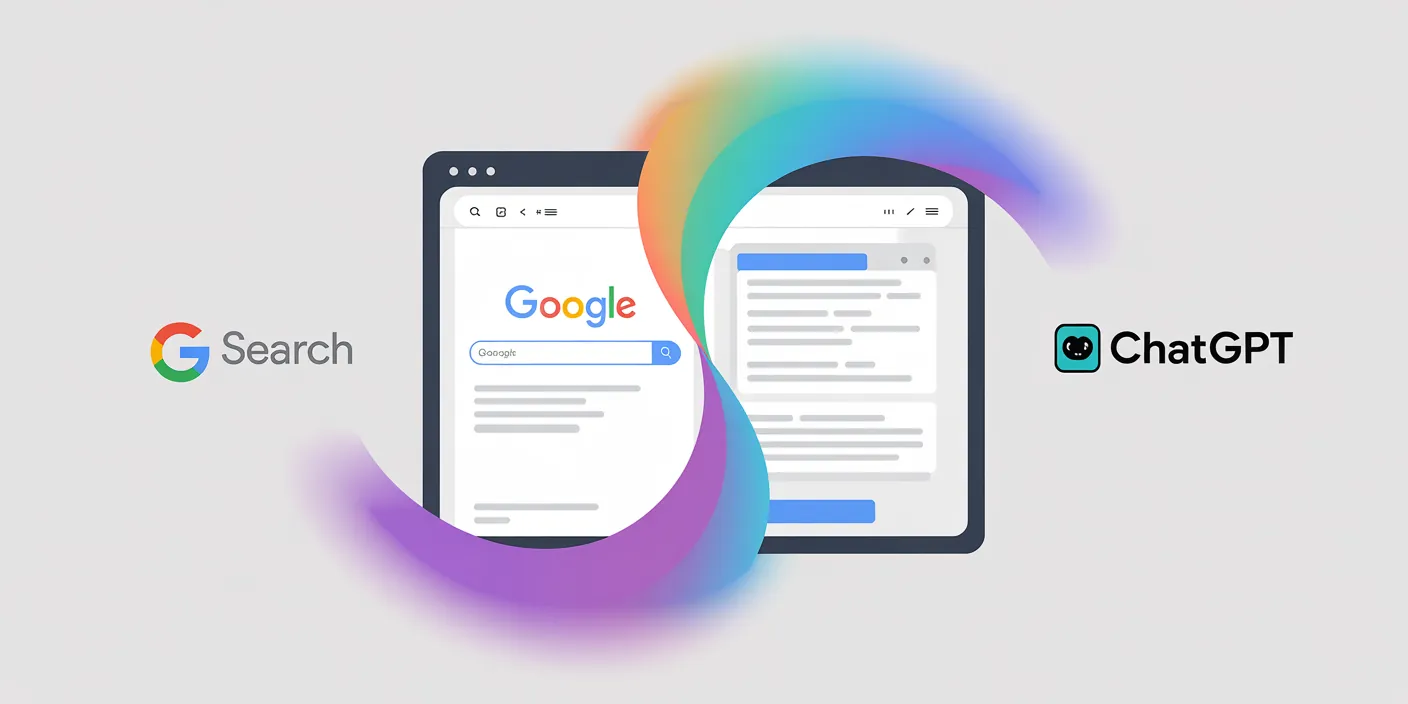
GEO is SEO aimed at AI answers. Neither one works well without the other.
What is AI SEO?
AI-powered SEO is ordinary SEO done with artificial intelligence doing the heavy lifting. It moves past matching keywords towards matching how Google actually reads language and search intent. The objective has not changed. You want your pages ranking as high as possible in the organic results.
Every action, from keyword research to technical SEO fixes, is aimed at encouraging a potential customer to see your link and click on it. This click drives valuable, qualified organic traffic to your website, where you can convert visitors into leads and sales. Without a solid SEO foundation, you are hard to find online.
What is GEO?
Generative Engine Optimisation (GEO) is the practice of shaping your content so it gets selected and cited inside an AI-generated answer, in Google’s AI Overviews, Perplexity or ChatGPT. The goal is to be the source the engine quotes rather than a link underneath it.
When a user asks a question and the AI answers with “According to [Your Business Name]”, you have won. That puts your name in front of the reader before they visit your site.
You cannot have effective GEO without strong SEO. A high ranking, a good backlink profile and clean technical health are the foundation an AI engine is likely to draw on.
AI research
Before you create content you need to know your Irish customers, your local market, and what your competitors already rank for. AI tools can turn much of that work into data.
AI keyword research
Traditional keyword research, which focused heavily on search volume and keyword difficulty, is no longer enough on its own.
More people now search using natural, conversational language. AI-powered keyword research tools are designed to uncover this deeper layer of user intent. They help you move beyond basic terms like “Dublin accountant” to find the specific questions your customers are actually asking, such as, “how much does it cost for a sole trader tax return in Ireland?” or “what are the best accounting software options for a small Irish business?”
Answering those long-tail, conversational queries lines your content up with what human readers and AI engines are both looking for.
AI competitor analysis
To outrank your competition you need to know what they are doing. A thorough SEO competitor analysis shows you the keywords they rank for, which of their pages earn the most backlinks, and where the gaps in their content are. The gaps are where you start.
AI content strategy
Your content has to do two things at once. It has to be full enough to earn a high ranking, and clear enough for an AI to lift an answer straight out of it.
Answer questions directly for GEO wins
AI models want an accurate answer fast. Write answer-first, in the inverted pyramid style. Open with a short, factual paragraph that answers the question outright, so the AI has a clear paragraph to lift into its own answer. The rest of your SEO copywriting then fills in the detail, the evidence and the context.
Use headings, lists and FAQs
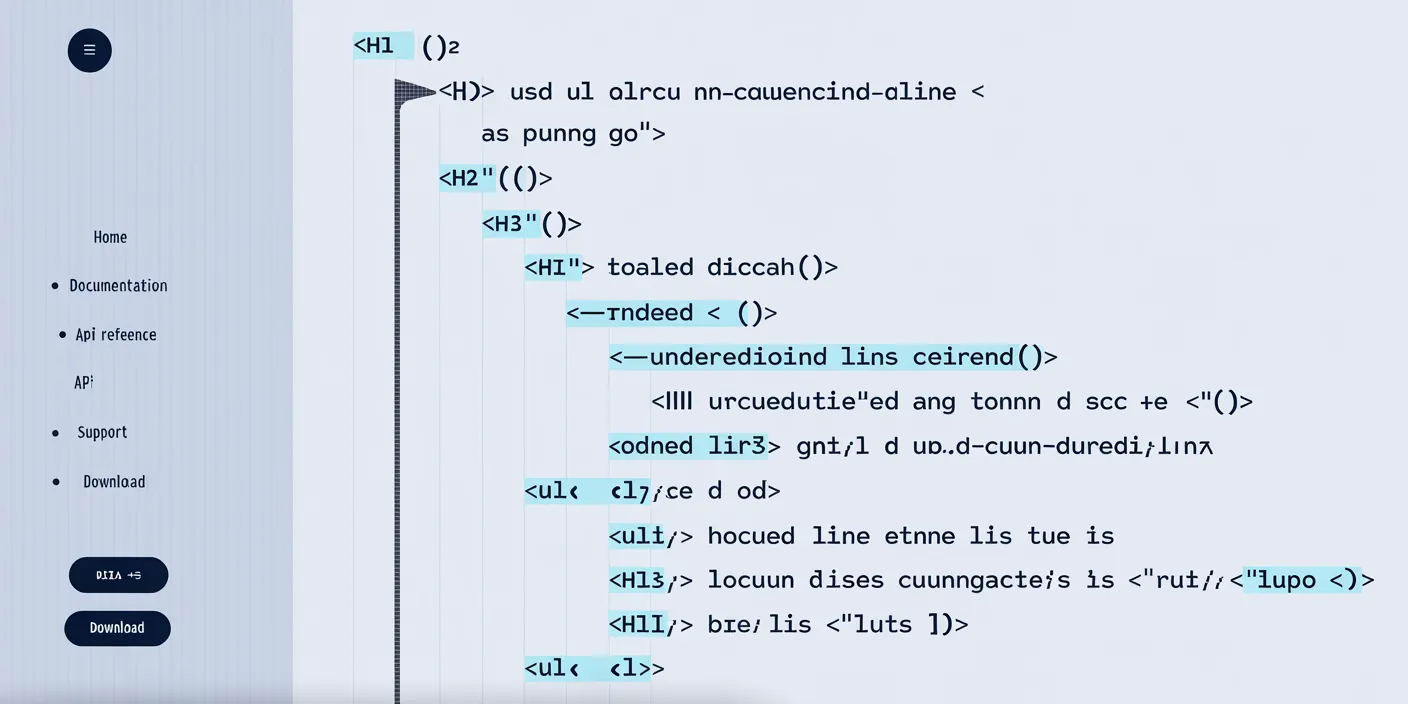
Readers and crawlers both find organised, scannable content easier to use. A wall of unstructured text is hard to read and hard to parse. Structure is on-page SEO.
- Headings (H2, H3): These create a clear hierarchy for your information, acting as signposts that guide readers and crawlers through your content’s main ideas and supporting points. Our header tag structure service can check this is done correctly.
- Lists (bulleted and numbered): They break down complex information into digestible, extractable chunks, and suit “how-to,” “best of,” or “what are the steps” questions.
- Bold Text: Use bolding strategically to highlight key terminology, entities, and concepts.
- FAQ Sections: Including a Frequently Asked Questions section at the end of your content is a direct and powerful way to target the question-based queries people type into AI tools.
Prove authority with E-E-A-T content
E-E-A-T (Experience, Expertise, Authoritativeness and Trustworthiness) comes from Google’s quality guidelines. Good SEO and good GEO both rest on it.
- Experience: Show, don’t just tell. Demonstrate real-world, first-hand experience with your topic. Our real-estate SEO case study shows the work in detail.
- Expertise: Prove your knowledge. Back up all claims with data. Cite statistics from credible, third-party sources, quote subject matter experts, and link to original research. Ensure your content is written by authors with clear, verifiable credentials, showcased in detailed author bios.
- Authoritativeness: This is your reputation within your industry. It is partly built through off-site signals like high-quality backlinks from other respected websites in Ireland and beyond.
- Trustworthiness: This is the foundation of user experience. It includes technical elements like having a secure website (HTTPS), clear contact information, and transparent policies like our privacy policy.
Technical and local SEO foundations
The best content strategy fails on a broken site. Get the technical side right and get the local setup right before you write anything.
Fixing technical SEO health with AI tools
Technical SEO can feel complex, but AI tools have made it more manageable than ever. These optimisation tools can automatically crawl your entire website, acting like a search engine to identify critical issues that could be harming your performance. This includes finding crawl errors, pinpointing pages with slow load times (one of the Core Web Vitals measures), flagging mobile-friendliness problems, and identifying opportunities to implement schema markup.
Schema is a form of code that acts as a translator for search engines, giving them explicit context about your content, for example, telling them “this is a recipe,” “this is a five-star review,” or “this is the address and phone number for a local business.” This added context helps search engines understand the page.
Local SEO in your Irish market
If you serve a particular area, local search is often where your customers come from. People search “plumber near me” or “best coffee in Cork,” and you want to be the first result. How local SEO affects your search rankings covers the mechanics. Most of the work is keeping your Google Business Profile accurate, so check your hours, services, address and phone number.
Regularly upload high-quality photos. Most importantly, actively encourage and respond to customer reviews. A steady stream of recent, positive reviews shows customers that your local business is popular and trustworthy, whether you’re targeting SEO in Dublin or any other location in Ireland.
Ready to optimise your site for AI search? Call us on (041) 986 5012.
Build authority and choose your AI tools
With a strong foundation and high-quality content, the final step for every marketer is to project authority and choose the right tools to outrank the competition.
Build backlinks and brand authority
Authority is what sets a business apart.
- Backlinks: A strong backlink profile is a vote of confidence. AI can speed up the slow work of link building by finding the relevant, high-authority websites in your industry for you to approach.
- Off-site recognition (the GEO boost): Your authority isn’t just built on your website. When other reputable sources, social media channels and forums mention your business, that builds recognition across the web.
Choose your AI SEO toolkit
A strategy is useless without the right AI SEO tools to execute it. The market for AI software is vast, but the tools generally fall into a few key categories. Understanding these categories allows you to build a “stack” that fits your specific needs and budget, remembering that your SEO strategy development should always dictate your choice of tool, not the other way around.
- All-in-One Platforms (for example, Semrush, Ahrefs, Outranking): These are the command centres for your whole SEO operation, covering keyword research, competitor analysis, rank tracking, and site audits.
- Content Optimisation Specialists (for example, Surfer SEO, Clearscope): These tools focus on helping you refine individual pieces of content and optimise your content, analysing top-ranking pages and providing data-driven recommendations to improve your on-page SEO.
- AI Content Generators (for example, Jasper, Copy.ai): These are assistants, not writers. They get you past a blank page with outlines and first drafts that a human then rewrites.
- Technical and semantic specialists (for example, WordLift): These tools specialise in advanced areas like automatically implementing schema markup and building knowledge graphs to improve your site’s semantic relevance.
Where to start
If you want a second pair of eyes on where your site stands with the AI engines, send us your web address and we will tell you what we find. No obligation.