



SEO is far from dead. Ignore it and you will fall behind.
When the printing press replaced the scriptorium, it transformed how ideas spread. That same shift is happening today with SEO.
A local print ad reaches the people who see that paper. A page that ranks on Google can be found by anyone searching for it.
For small businesses competing with corporations that pour millions into advertising, SEO is where a smaller budget still competes. A smaller business can compete for search results without matching their spend, and it does not need a marketing department to start.
No, SEO Is Not Dead
Everything about how SEO works has changed, though.
Old-school keyword stuffing and link farms are finished. Google’s spam systems work against sites that use them.
Small businesses have an advantage here. You can adapt quickly, target specific niches and build genuine expertise.
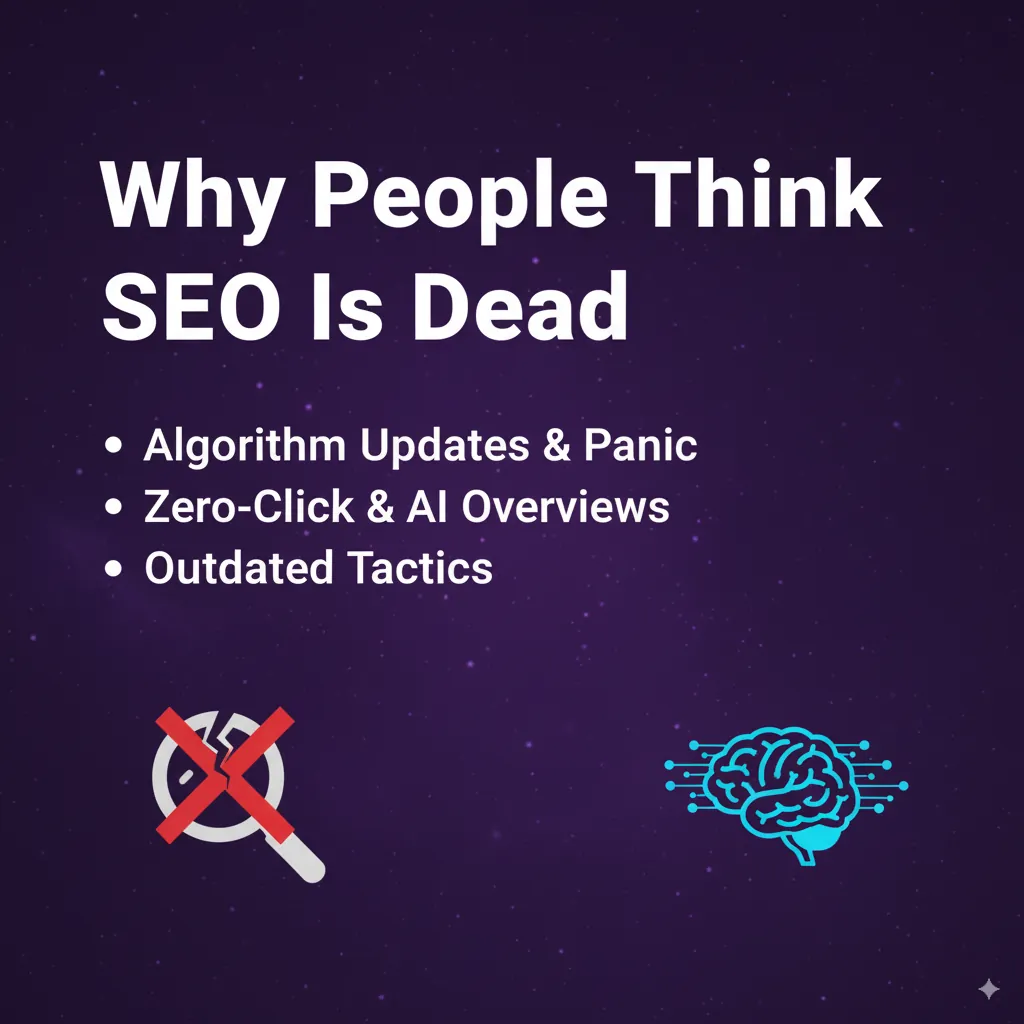
Why People Think SEO Is Dead
Every algorithm update brings fresh “SEO is dead” predictions. Zero-click searches, AI overviews, and changing user behaviour fuel this panic.
SEO works when you follow the new rules instead of clinging to 2015 tactics.
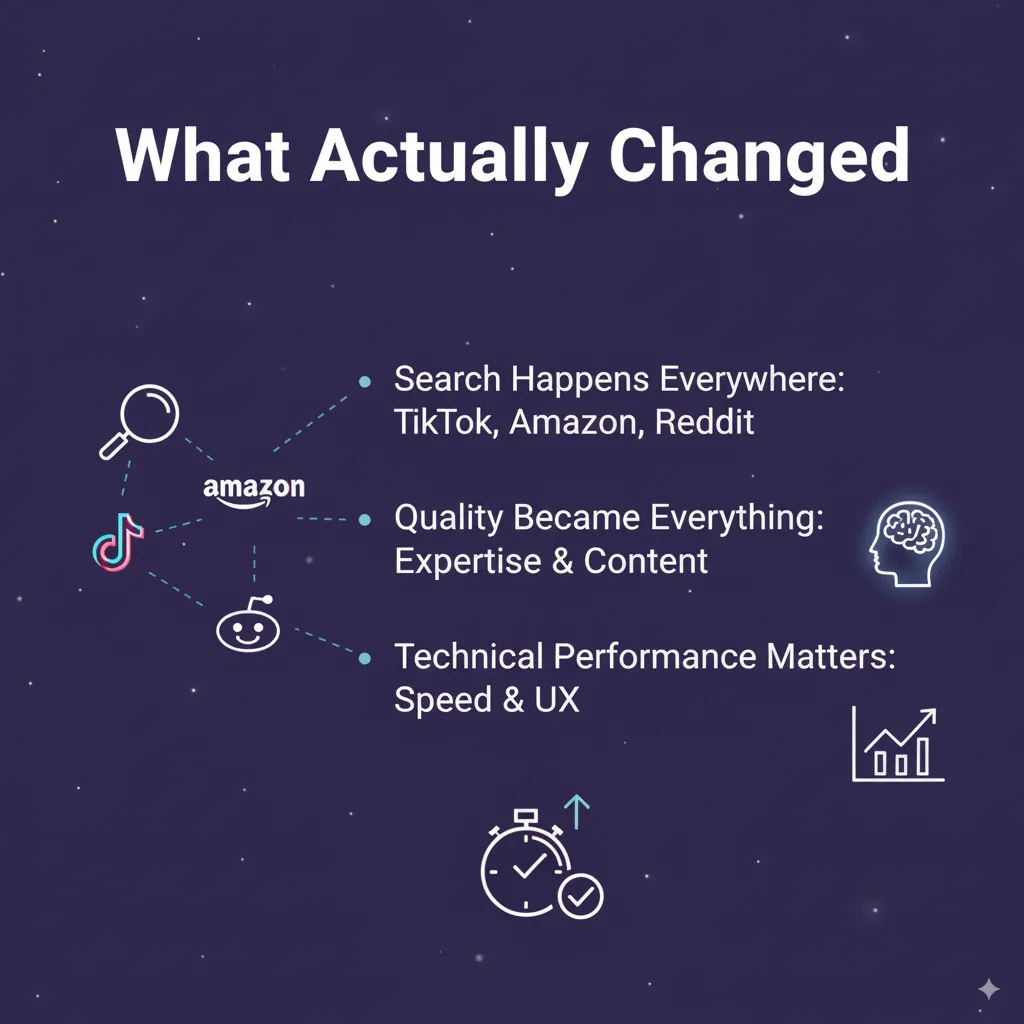
What Actually Changed
Search happens everywhere. The opportunity expanded beyond Google to every platform where people look for answers.
Quality matters more than before. Google’s algorithm separates genuine expertise from generic advice. Experience-based content is what Google’s guidance asks for, and a site with clear authority in one field can beat one that covers everything.
Technical performance matters. Core Web Vitals are Google’s measures of page experience. For the main content to load, Largest Contentful Paint should be 2.5 seconds or less to count as good. Interaction to Next Paint should be 200 milliseconds or less, and Cumulative Layout Shift should be 0.1 or less. Google collects these figures from real Chrome users.
The Three Rules That Win
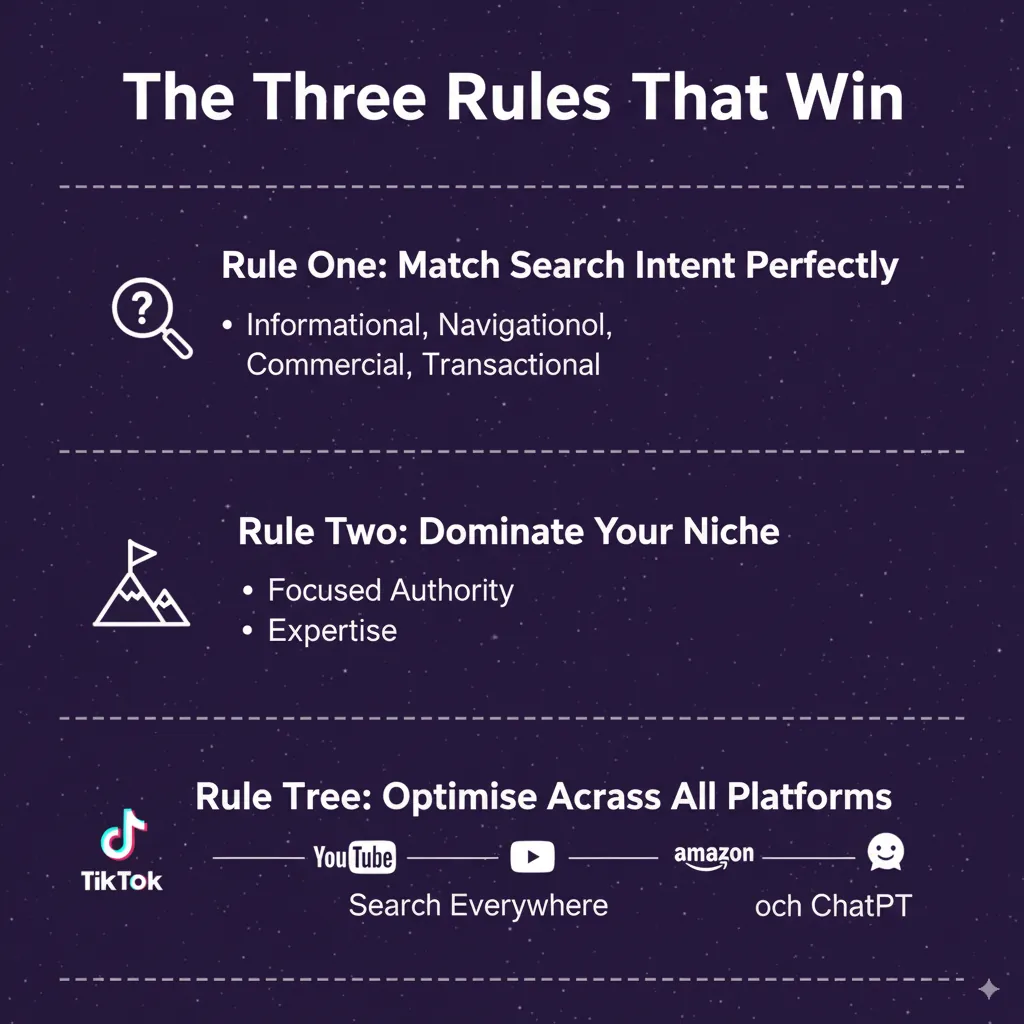
Rule One, Match Search Intent
Old SEO targeted “best laptops.” New SEO understands that searchers want comprehensive buying guides with comparison tables, genuine reviews, and clear recommendations for different use cases.
Search intent usually falls into four types. Informational searches seek knowledge. Navigational searches find specific websites. Commercial investigation compares options before buying. Transactional searches indicate immediate purchase readiness.
Match your content to the specific intent, and you’ll outrank competitors still chasing keywords without understanding user needs.
Rule Two, Own One Niche
Google rewards deep expertise over broad coverage.
Choose one topic area, create comprehensive content around every aspect, and interlink logically. Specialist knowledge can help a small business compete with bigger names.
Rule Three, Optimise Across Every Platform
The same principles apply across platforms.
YouTube rewards engagement and watch time. Create compelling thumbnails, optimise titles for discovery, and build series that keep viewers watching.
Amazon prioritises sales performance. Use keyword-rich product titles, detailed descriptions, and strategies for generating positive reviews.
TikTok values trending topics and authentic engagement. Research hashtags your audience uses, create shareable content, and post during peak hours.
The Tools You Need
Google Search Console monitors performance and reveals search query data. Google Analytics tracks user behaviour and conversion paths. Ahrefs provides competitor research and keyword analysis. SEMrush offers comprehensive auditing and rank tracking.
Biggest Mistakes That Kill Results
Ignoring user experience can hold back rankings, even when the content is good. Slow loading and poor mobile performance hurt the experience Google measures.
Focusing only on keywords rather than topics creates artificial content that serves neither users nor search engines.
Expecting immediate results leads to strategy abandonment before tactics work.
Your Next Steps
Start with Google Search Console to identify technical issues and opportunities. Research competitors to understand content requirements. Create focused content demonstrating expertise in your area while serving user intent completely.
Implement technical improvements for Core Web Vitals and mobile optimisation. Build authority through consistent, valuable content creation rather than trying to manipulate rankings.
The Reality
SEO is not dead. It still works for the businesses that follow the current rules.
Zero-click results and AI answers change where clicks come from, and they raise the bar for quality. Social media and voice search have not replaced Google. They add places where people search.
Companies succeeding with SEO understand that modern search rewards genuine value creation over manipulation. They build authority systematically, optimise across platforms strategically, and serve customer needs rather than chasing rankings.
While bigger companies debate whether SEO works, a small business can win customers with a better strategy and faster execution.
Ignore SEO and your business will be hard to find. Follow these three rules and you give your business a fair chance against bigger companies, without matching their ad budgets.
Contact us to talk it through. No obligation.