



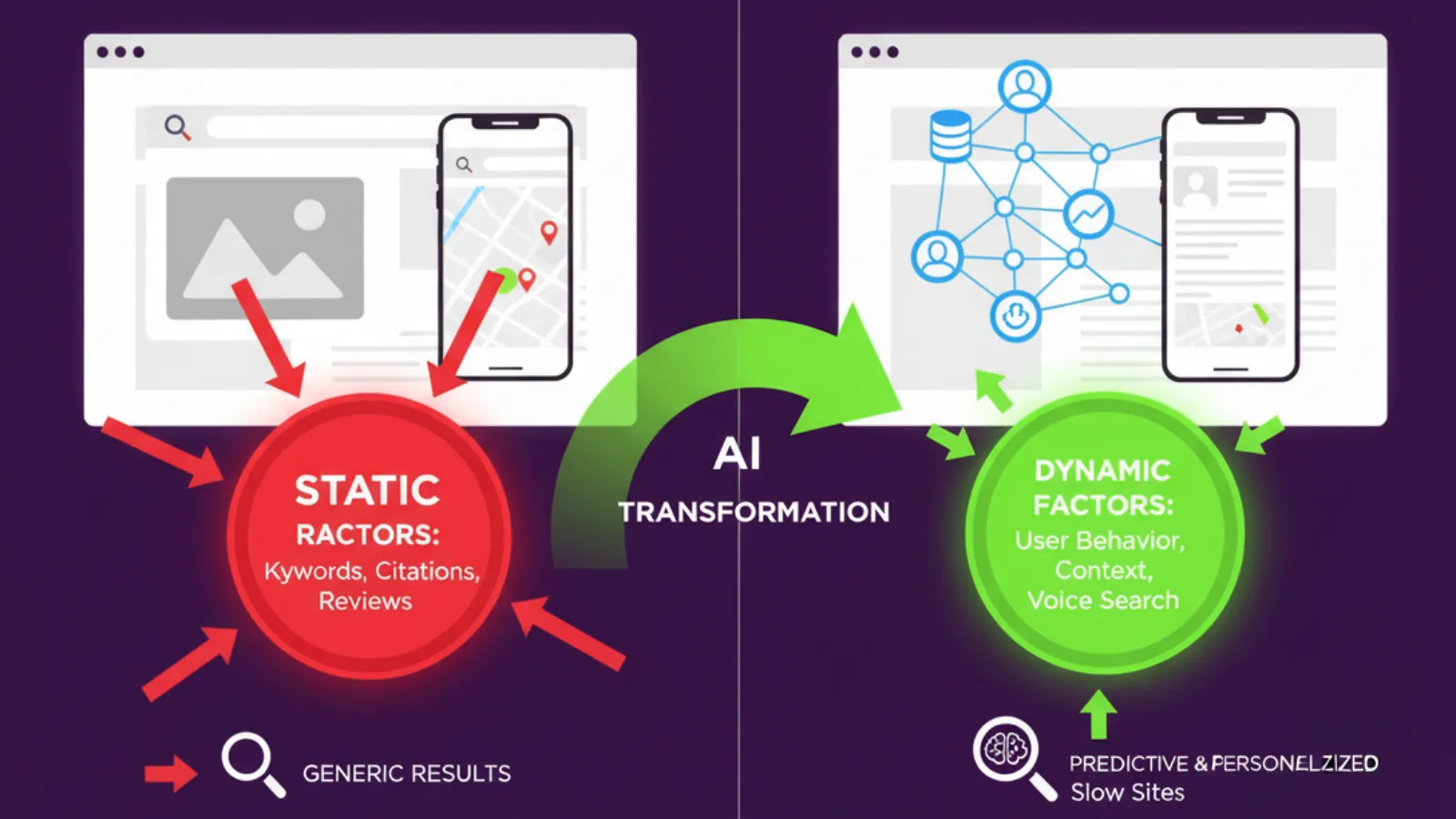
The way people search for a local business has changed. They ask their phone a full question, or they read an AI Overview and never click a result at all. Voice assistants and AI-driven results have changed what search engines look at when they decide which local business to name.
Understanding How AI is Changing Local Search and SEO Strategies
The rise of generative AI systems like ChatGPT, Google’s AI Overviews, and other AI-powered search tools has changed how search engines understand search queries. Traditional local SEO relied heavily on exact keyword matches and basic optimisation techniques. Today’s AI models analyse context, intent, and relationships between concepts in ways that make search faster and more intuitive for users.
AI systems no longer match keywords and stop there. They read the intent behind a query and handle conversational language, which is why the older optimisation tactics do less on their own than they used to.
What Local SEO AI Tools Change for Your Local Presence
AI changes how search engines and AI platforms process local queries, which is why older SEO tactics do less than they did. When someone asks their phone to find “the best coffee shop that’s open now,” AI-driven search, like Google, goes beyond simple keyword matching. It considers factors like real-time business hours, current traffic conditions, user preferences based on past behaviour, and authentic customer sentiment from reviews.
Google’s AI Overviews now appear above traditional search results for many local queries, pulling information from multiple sources to create comprehensive answers. This means your Google Business Profile data needs to be more accurate and detailed than ever before. AI search evaluates every piece of information about your business across the entire web, not just your website.
The use of artificial intelligence in local discovery means search engines evaluate content quality differently. They can detect thin content, keyword stuffing, and other outdated SEO strategies that once worked for regional rankings. Instead, AI models reward businesses that create content addressing real local needs and questions.
Voice Search, AI Mode and Local Queries
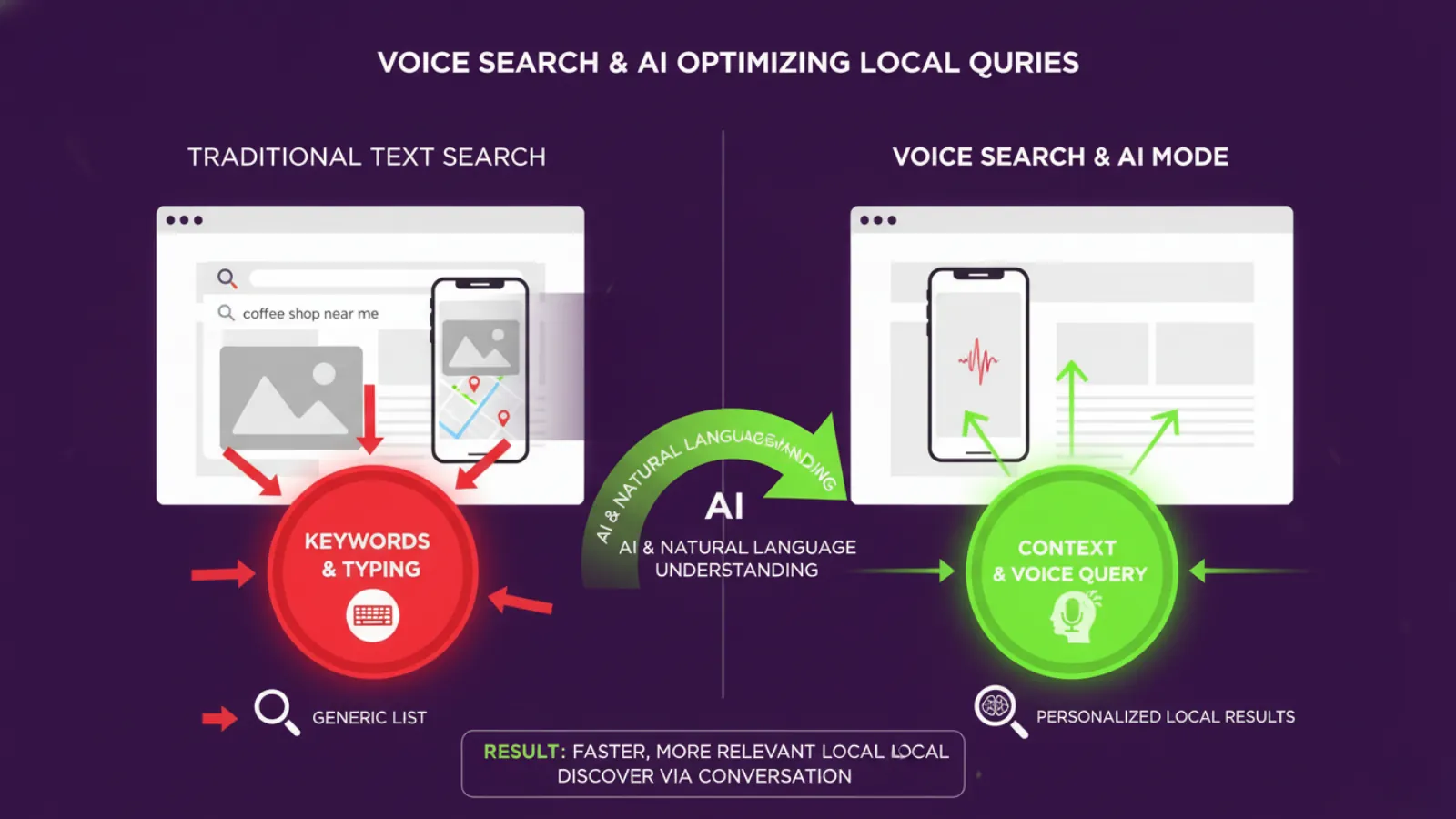
Voice search has become a primary driver of local search performance. Nearly 60% of consumers now use voice search to find local business information, and this number continues growing. AI-powered tools like Siri, Alexa, and Google Assistant have made search more conversational, requiring businesses to rethink their local SEO efforts.
To optimise for voice search effectively, your local content must answer questions the way people actually speak. Instead of targeting “restaurant Dublin,” you need content that addresses “Where can I find good Italian food near me tonight?” This shift requires understanding natural language patterns and local intent behind search queries.
Voice search also rests on your technical SEO, on pages that load quickly and work on a small screen. Most voice searches happen on a phone, so the phone version of your site is the one being read.
How AI Overviews and AI-Driven Search Results Impact Search Rankings
Google’s AI Overviews change where the local answer appears. The summary pulls from several sources and answers the question on the results page, often with no click to anyone’s website. That puts the weight on whether the data about your business is accurate wherever Google finds it.
Traditional local SEO focused on ranking in the standard organic results and the local pack. Now the same business has to hold up in several formats at once. Your business information must match across your website, Google Business Profile, social media and local directories, because AI systems cross-reference it to decide whether you are credible.
The impact on search rankings goes beyond just visibility. AI-driven search results consider user engagement metrics more heavily than traditional search engines. If people quickly leave your site or don’t engage with your Google Maps listing, AI models interpret this as a negative signal for future local rankings.
Technical SEO and Local SEO Automation in an AI Search Era
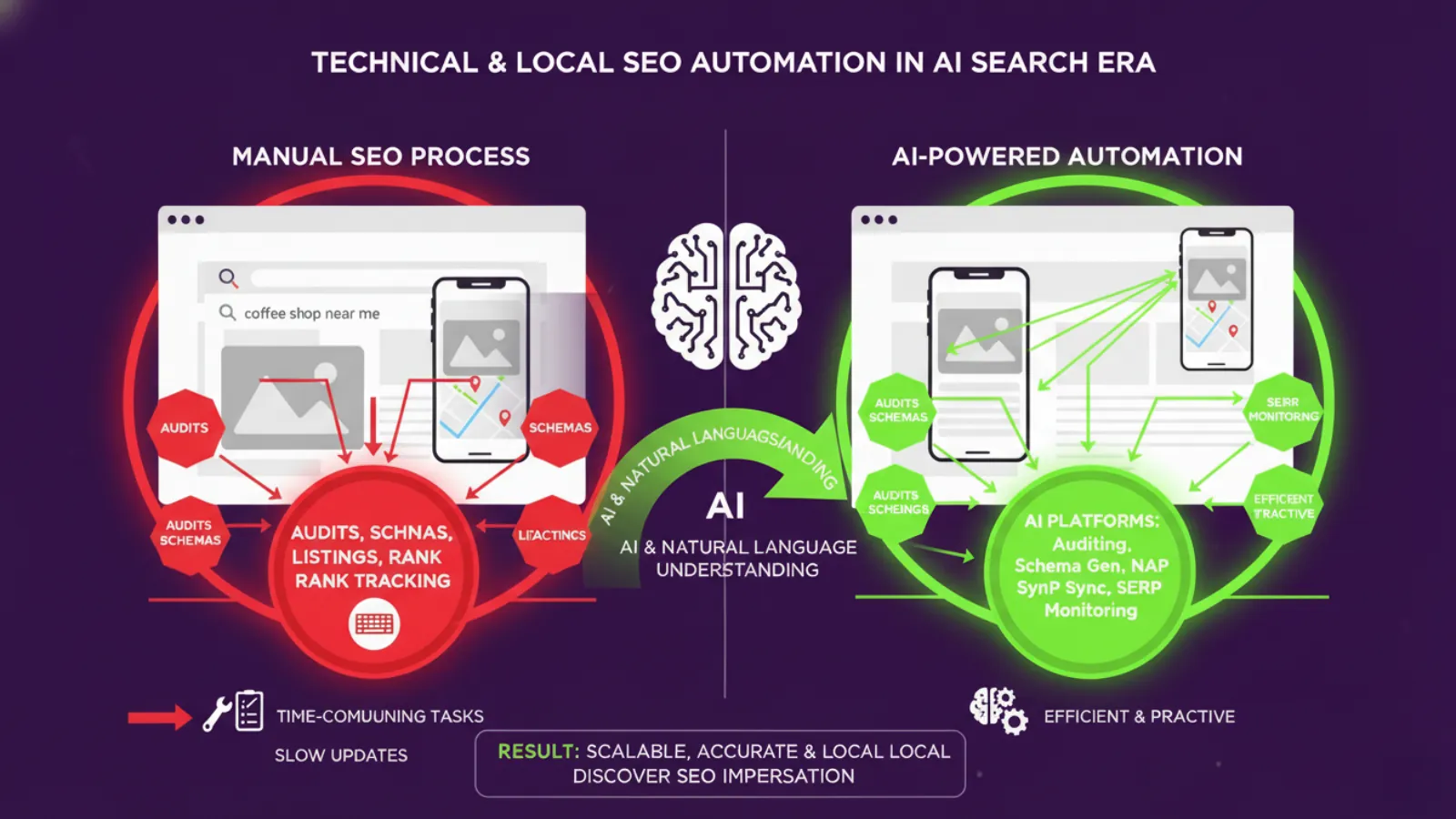
Technical SEO now goes past site structure and meta tags. Schema markup used to be optional and is not any more, because it is how an AI system reads what your business is. Structured data tells it your services, your hours, your location and the rest of the detail it would otherwise have to guess at.
Local SEO automation through AI SEO tools can help businesses stay competitive without massive resource investments. These tools can monitor search trends, track local rankings, analyse competitor strategies, and suggest content improvements. However, automation should enhance human expertise, not replace it entirely.
The key to effective local SEO automation lies in selecting the right AI tools for your specific needs, transforming local SEO strategies. Some excel at keyword research for local intent, while others specialise in review management or citation building. Understanding each tool’s strengths helps you build a comprehensive local SEO strategy.
Using AI Tools in Local SEO Campaigns
AI tools can read search trends in your area, show where your content has gaps and point at opportunities you would miss going through it by hand. What comes back tells you what local customers are actually asking about.
AI SEO tools can automate time-consuming tasks like monitoring local search performance, tracking competitor movements, and identifying broken citations. This frees up time for strategic activities like building local partnerships and creating unique, valuable content for your community.
However, AI tools work best when combined with genuine local knowledge. While AI can identify that people search for “emergency plumber Dublin Sunday,” only local expertise can create content addressing specific neighbourhood concerns or local regulations that affect service delivery.
Creating Local Content That AI Systems and Search Engines Value
AI is reshaping how businesses must approach content creation. Generic, templated content no longer performs well in local search. AI systems can detect duplicate or slightly modified content across locations, penalising businesses that don’t create unique value for each market they serve.
Effective local content in 2025 addresses specific community needs, local events, and regional concerns. AI models evaluate whether content genuinely serves local intent or merely targets keywords. This means writing about local partnerships, community involvement, and area-specific solutions to common problems.
The move towards AI-driven search means content has to be thorough and still easy to read. Long pages that cover a topic properly do well, as long as the headings and the order of them make sense to a machine reading through.
How Google Search and AI May Transform the Future of SEO
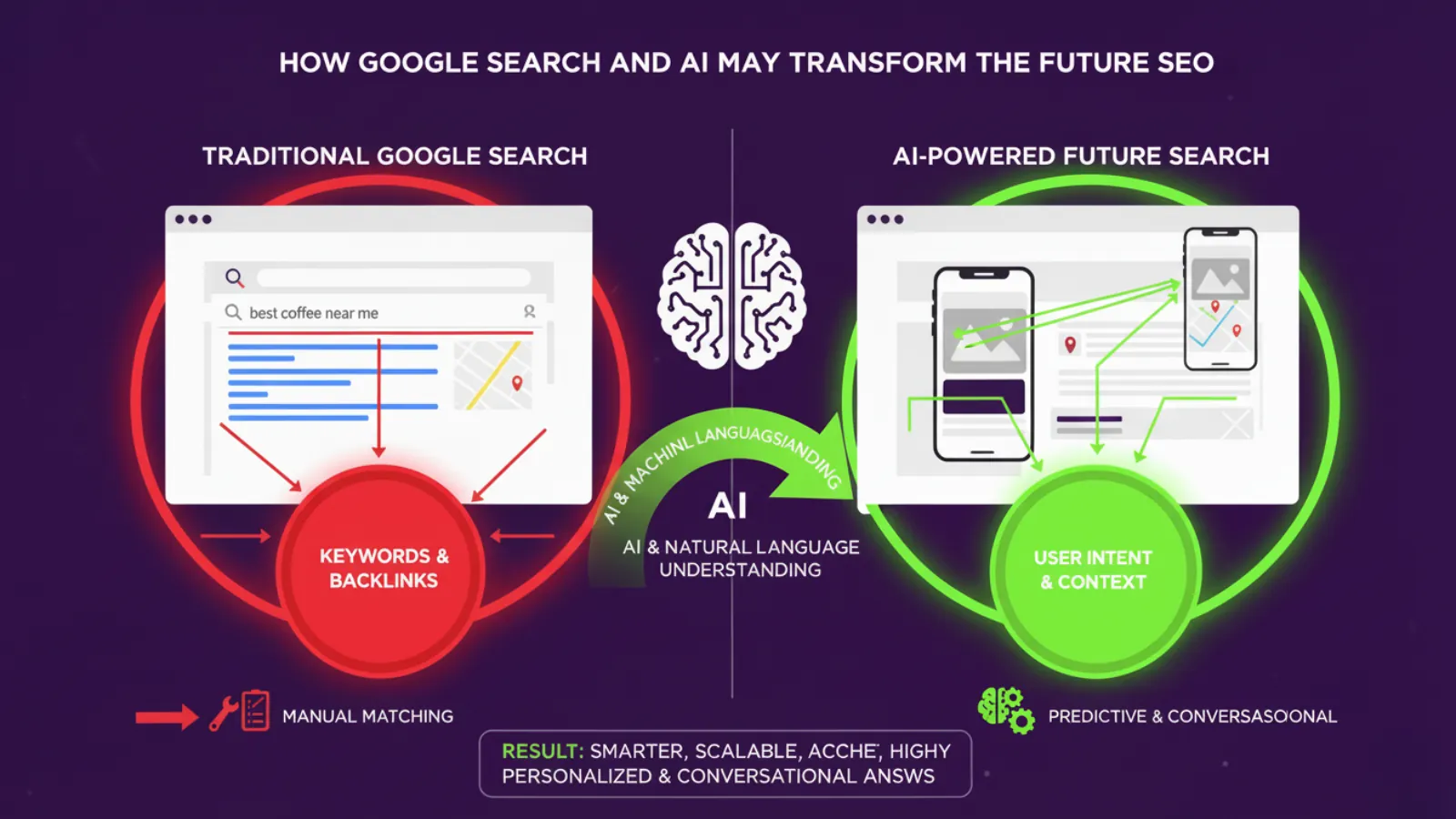
Google’s AI Overviews are the first version of this, not the finished one. As the models get better at reading a local query they will handle more of the nuance in it themselves. Local SEO gets more complicated as that happens.
AI may soon predict what users need before they search, using patterns from previous behaviour and current context. For local businesses, this means ensuring consistent, positive interactions across all touchpoints. Every customer interaction feeds data that influences how AI systems perceive and recommend your business.
The future of SEO will likely see even tighter integration between AI search and real-world signals. Foot traffic data, real-time inventory, and dynamic pricing could all factor into local search rankings.
Making Local SEO Work in AI Search Results
AI has changed what a business has to do to be found locally. The tactics that worked on an algorithm work less well on a system that is reading for whether you are any good at the job.
Local SEO keeps your business findable as the technology changes. That means accurate business information, replies to reviews, local backlinks worth having, and content about the things local customers actually ask. None of that has changed, and AI has made it harder to fake.
Older ranking signals could be manipulated. AI-driven search leans harder on whether people were satisfied with what they got, which favours the business that looks after its customers over the one that looks after its tricks.
Implementing AI for Local SEO Performance and Search Engine Rankings
Success with AI and local SEO requires a strategic approach. Start by auditing your current local presence across all platforms. Ensure your Google Business Profile contains complete, accurate information, including services, attributes, and regular posts about local activities.
Next, analyse how people search for businesses like yours using AI tools. Look beyond traditional keyword research to understand the questions and problems your local customers face. Create content that comprehensively addresses these needs while maintaining local relevance.
Monitor your local SEO performance on the old metrics and the new ones. Rankings still count, and so does whether you turn up in AI Overviews, voice results and the other AI features. Judge the work on enquiries, not on traffic.
The Evolution of Local SEO in an AI World
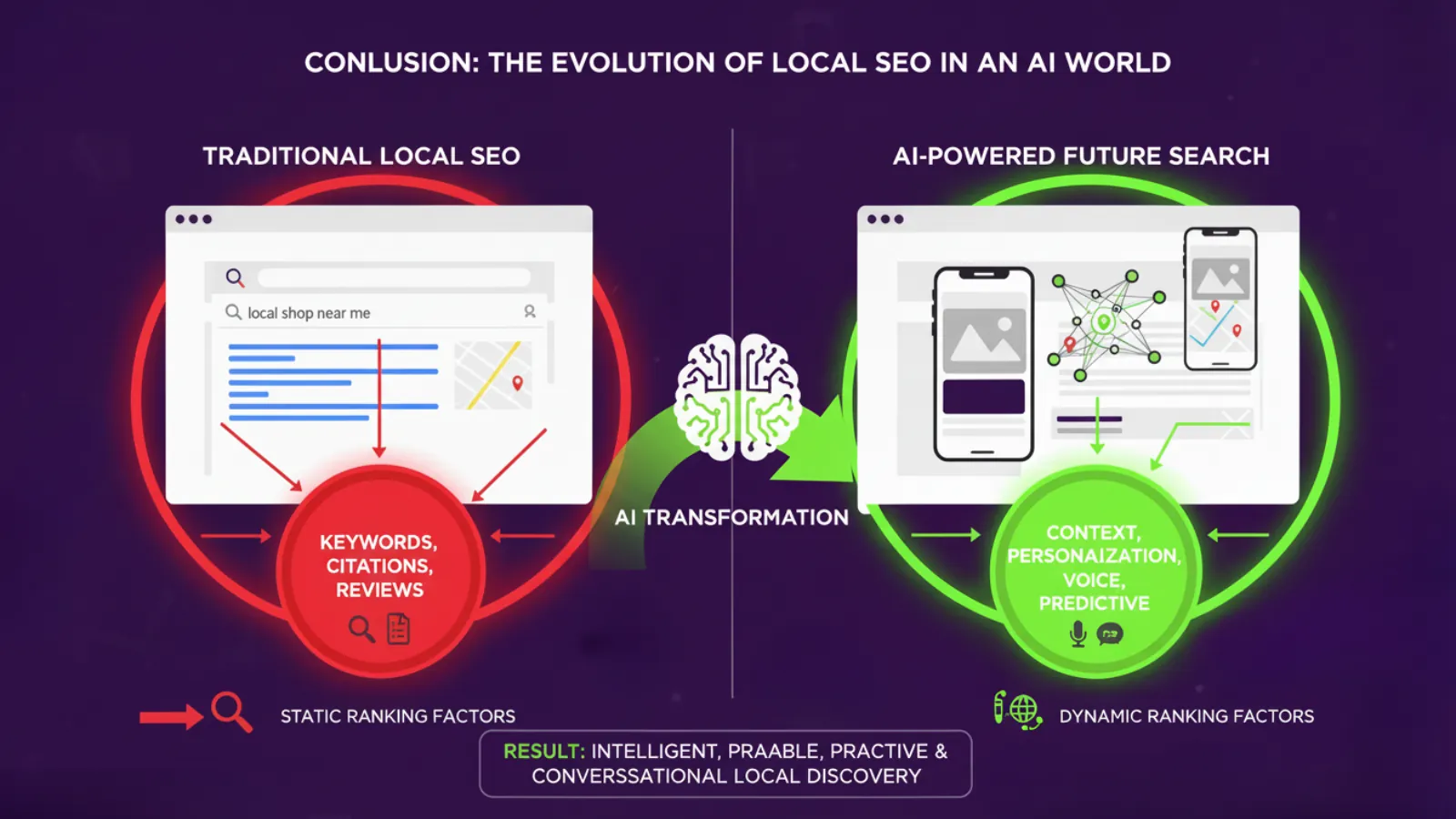
For an Irish business the work has not changed much, it just has to be done properly. An accurate Google Business Profile, reviews you answer, and content about the town and the jobs you actually do. That is what gets your name read out when somebody asks their phone.