

ChatGPT ads are here. Since the end of August 2026, Irish and UK businesses have been able to buy them directly.
So you are probably asking three things. Can you actually use them yet? What do they cost? And is this worth your money, or another shiny thing that burns a budget and teaches you nothing?
Here is the short version. ChatGPT ads appear below ChatGPT’s answers, clearly labelled, and only for people on the Free and Go plans. You buy them in OpenAI’s Ads Manager, paying per thousand views or per click, and OpenAI suggests starting bids of $3 to $5 a click.
Ireland and the UK are both on its list of countries where businesses can sign up and run ads themselves.
The early evidence is sobering, though. One agency that published its own test paid around $13 a click and got no enquiries at all.
This guide takes each part in turn, using OpenAI’s own documentation and screenshots. If you would rather have it set up and tested for you, that is part of our paid media service.

What are ChatGPT ads?
They are sponsored results that appear underneath ChatGPT’s answer, matched to what the person has just asked.
Ask ChatGPT what you need to build a garden fence, and it answers the question. Below the answer, there may be an ad from a company selling fence panels.
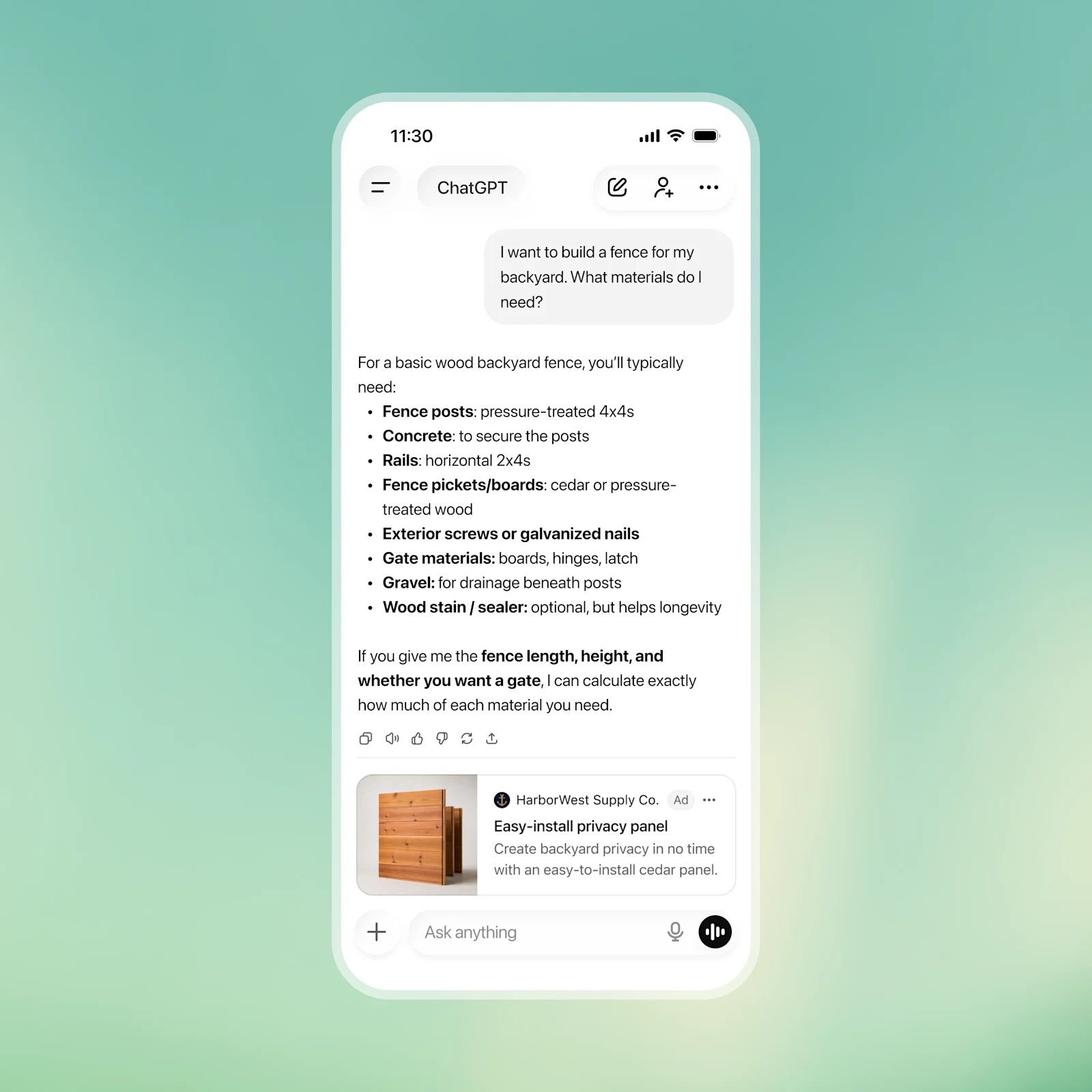
OpenAI is firm on three points. Ads are always clearly labelled. They are separate from ChatGPT’s answers. And advertising does not influence the answers ChatGPT gives.
That last point matters more than it sounds.
It means there are now two ways to show up in ChatGPT. Being in the answer is SEO: ChatGPT builds its answers from pages that rank for the searches it runs, which we explain in our article on query fan-out. Being beside the answer is an ad.
You can buy the second. You can’t buy the first.
Can you advertise on ChatGPT in Ireland and the UK?
Yes.
OpenAI began testing ads in the United States in February 2026, then added eight more markets. On 18 August 2026 it announced ChatGPT ads for 31 European markets, and on 31 August it opened self-service access through Ads Manager across all of them.
OpenAI’s Ads Manager availability list shows both Ireland and the United Kingdom as available. The catch is in the small print: the legal entity that advertises and is billed has to be based in a listed country. For an Irish company, that is straightforward.
Who sees ChatGPT ads?
Not everyone. Ads are shown only to people on ChatGPT’s Free and Go plans.
OpenAI doesn’t show ads to users on Plus, Pro or any Business plan, or to accounts it identifies as belonging to someone under 18. People also get control over ad personalisation.
And advertisers never see the conversations. OpenAI says it keeps conversations private from advertisers and never sells customer data. You reach the person in the moment. You don’t get to read what they typed.
What a ChatGPT ad looks like
There is one format, and it is simple. Every ad carries your business name, your logo, a headline, a short description, an image and a link to your landing page.
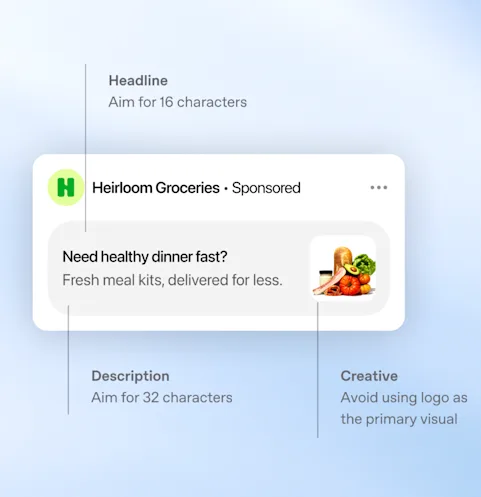
Short is the point. Sixteen characters is two or three short words. Your business name and logo come from your account settings, so set them up exactly as you want them to appear.
How ChatGPT decides when to show your ad
This is the biggest difference from Google Ads. There are no keywords to bid on.
OpenAI’s system picks ads on expected relevance and results. It weighs the context and intent of the conversation, your landing page, your headline and description, and, when the person has ad personalisation switched on, signals from their wider ChatGPT use.
What you provide are context hints. At the ad group level, you describe the conversations, topics or keywords where your product fits. OpenAI is clear that these guide the matching but are not exact-match keywords, and they don’t guarantee your ad appears in any particular conversation.
You can still narrow who sees your ads. OpenAI has added geo-targeting and custom audiences, set at campaign level.
And there are places your ad will never appear. OpenAI’s policies keep ads away from sensitive conversations, including mental and personal health, politics and emotionally vulnerable moments.
How much do ChatGPT ads cost?
You set the most you are willing to pay. The auction decides the rest.
There are three ways to buy. Views, paid per thousand impressions. Clicks, paid per click. And Conversions, where the system optimises for a conversion you choose but still bills you per valid click.
You set a maximum bid for each ad group. For click campaigns, OpenAI recommends starting with a maximum of $3 to $5 per click, and Ads Manager can tell you whether your bid looks strong enough to compete.
Ads are chosen in what OpenAI calls a relevance-weighted, second-price auction, so a more relevant ad can beat a higher bid, and you don’t necessarily pay your maximum.
Treat that $3 to $5 as a starting point, not a price. In the one published test we cover below, ads barely ran until the bids went well above it.
OpenAI’s setup guides don’t mention a minimum spend. You pay by credit card.
One thing to decide carefully: the country, currency and time zone you choose when you open the account can’t be changed afterwards.
How to advertise on ChatGPT, step by step
The forms are quick. Approval can take longer.
- Sign up at ads.openai.com with an OpenAI account tied to your work email.
- Enter your business details: name, website, logo and industry, then your country, currency and time zone. Check these twice. They are fixed.
- Verify the business. OpenAI verifies advertisers through Persona and checks that what you sell is allowed under its ad policies. Applications are reviewed in a rolling queue, so this can take some time.
- Finish your account details. Once access is granted, set your account name and logo exactly as they should appear in your ads. Ads won’t run until you do.
- Add billing. A billing profile and a credit card.
- Build your first campaign. A campaign sets your objective, budget, dates and targeting. Inside it, ad groups hold your context hints. Inside those, your ads: headline, description, image and landing page. Then submit for review.
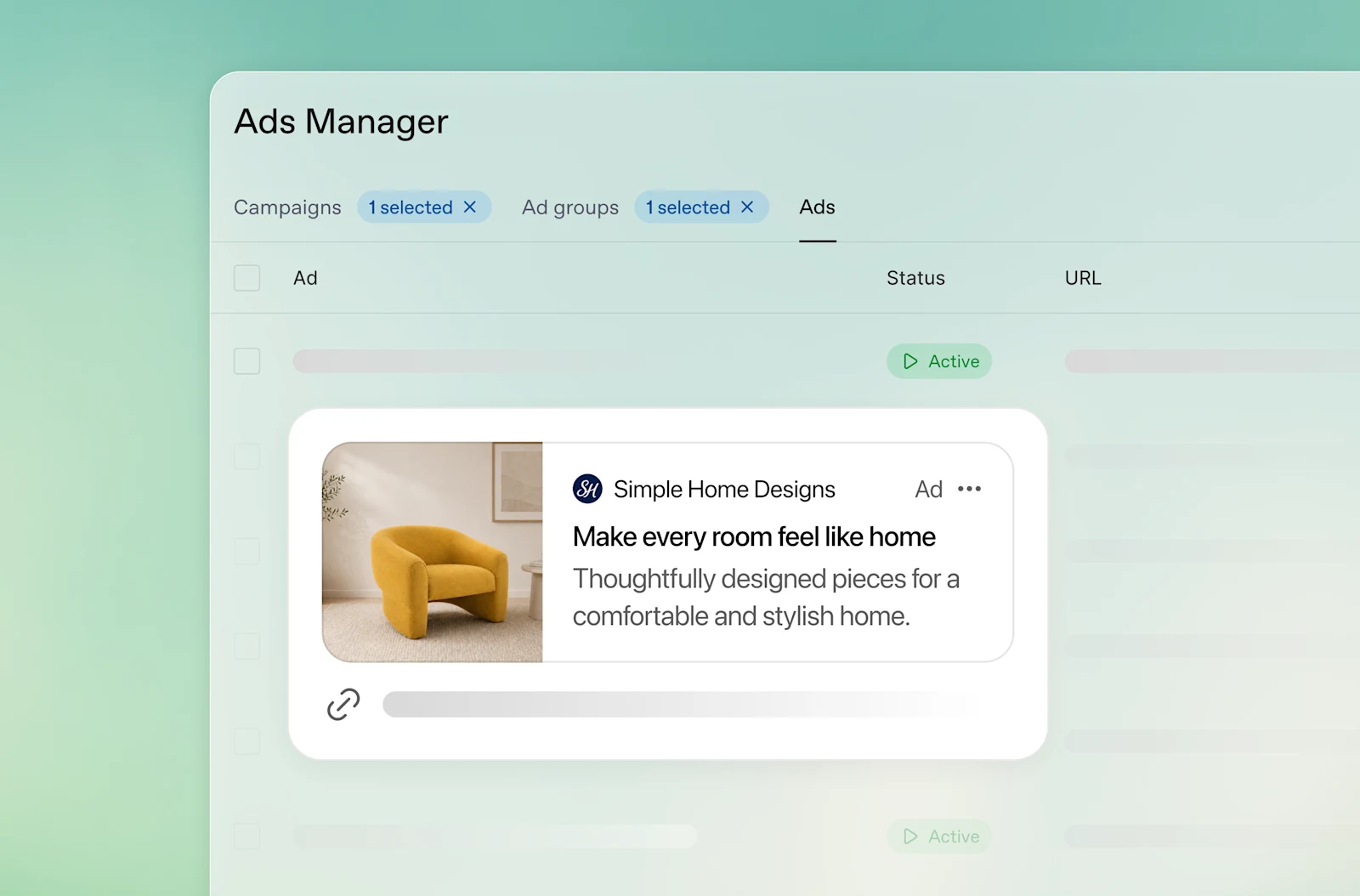
If an ad is marked “Not serving”, hover over the status to see why. Many problems can be fixed by editing and resubmitting.
What you can and can’t advertise
This is where a lot of Irish businesses will find out whether ChatGPT ads are for them yet.
OpenAI’s ad policies say that during the initial period, ads are mainly limited to consumer categories: lifestyle and household goods, local services, travel and experiences, and digital products and education.
Financial services, healthcare and medicine, and legal services are being opened gradually, with approvals reviewed by hand, case by case. Dating, alcohol, gambling and political ads are among those not allowed. OpenAI says the list may change.
In practice, a furniture shop, a kitchen company, a tour operator or a training course fits the early categories well. A solicitor, a clinic or a financial adviser sits in the categories OpenAI is opening slowly. A pub promoting its drinks can’t advertise at all.
Two rules apply to everyone. Ads must be truthful, with no exaggerated claims. And they must not imitate ChatGPT’s own interface.
How to measure ChatGPT ads
Ads Manager reports impressions, clicks, spend, click-through rate, average cost per click, average cost per thousand impressions and conversions.
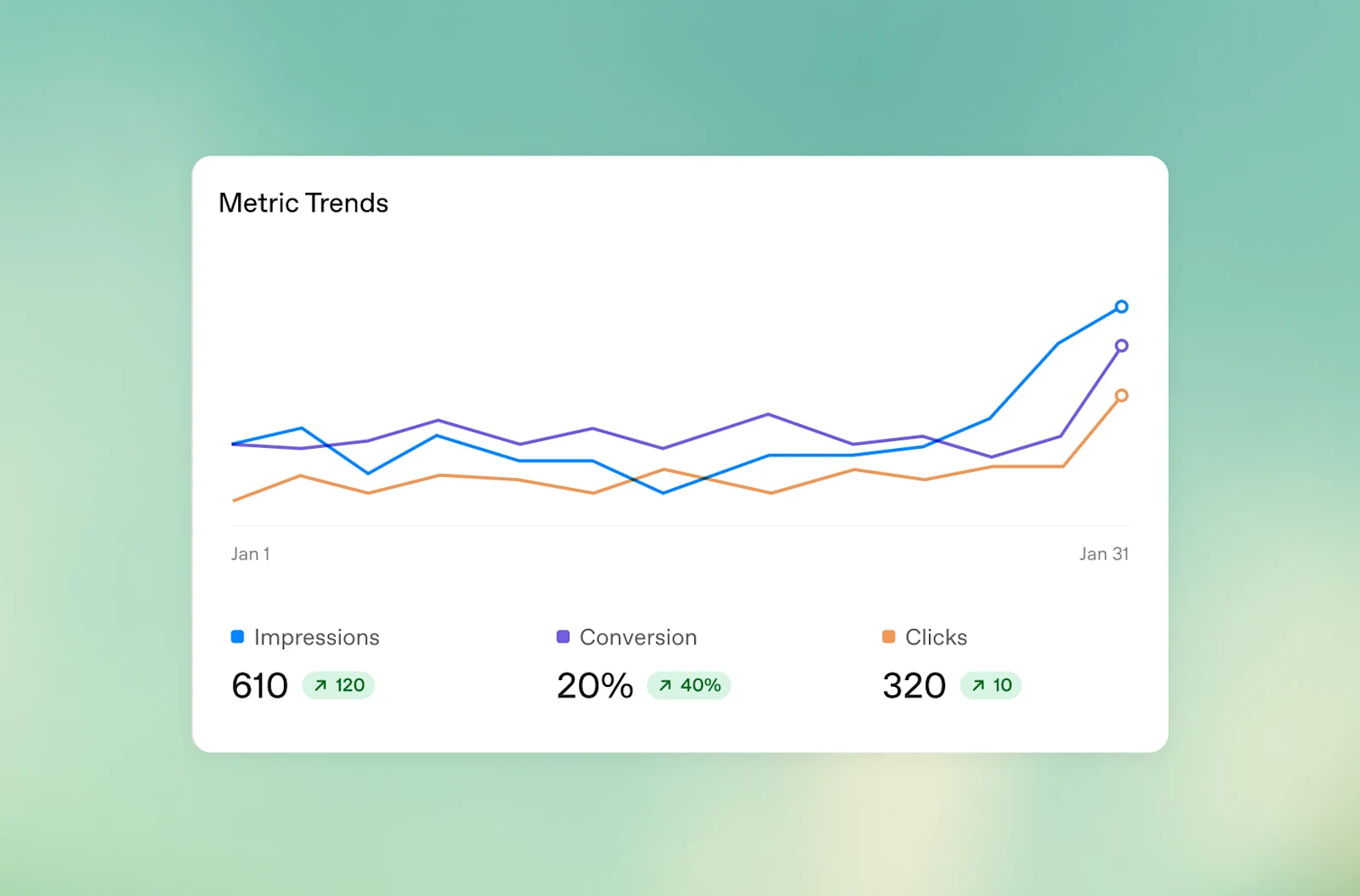
To track conversions properly, OpenAI offers its own Pixel and a Conversions API, plus third-party measurement integrations. You can also add UTM tags to your landing page links, which carry through to your own analytics.
Impressions and clicks can show within minutes. Spend can take longer, so a spend of zero in the first hours doesn’t mean nothing has been charged.
What you won’t see is the conversation. Because OpenAI keeps chats private from advertisers, there is no equivalent of the search terms report in Google Ads, the list of what people actually typed before they clicked.
Do ChatGPT ads work?
Nobody can answer that for Irish businesses yet. Self-service only opened here at the end of August 2026.
The most useful evidence so far comes from a paid search agency that spent its own money testing the platform and published the results. It is one test, run in an earlier version of Ads Manager, advertising agency services to businesses. Read it as a warning, not a benchmark.
They spent about $1,200. That bought 92 clicks, at an average of roughly $13 each. They paid about $120 per thousand impressions, and around 1% of the people who saw an ad clicked it.
Enquiries? None.
Three things in what they reported are worth knowing before you spend a cent.
The recommended bid wasn’t enough. OpenAI’s $3 to $5 starting point barely got their ads shown. Delivery only picked up once they raised bids well above it, and the average settled around $13 a click.
Business buyers are harder to reach. Ads only go to Free and Go users. Anyone using ChatGPT on a paid plan, including through their employer’s Business plan, never sees one. If you sell to businesses, some of the people you most want to reach are on the other side of that line.
You can’t see what triggered your ad. Reporting showed impressions, clicks and costs, but not the conversations behind them. So you can’t tell which questions led to the clicks you paid for.
Some of this has moved on. Conversion campaigns were still marked “coming soon” when they ran their test, and OpenAI has since added conversion optimisation, its Pixel and a Conversions API. The audience rule and the privacy of conversations are there by design, so plan around them.
Are ChatGPT ads worth it for an Irish business?
For some businesses, yes, as a test. Not as a replacement for anything.
OpenAI pitches ChatGPT ads at people who are exploring, comparing and deciding. That fits considered consumer purchases: a new kitchen, a holiday, a piece of furniture, a course. It fits less well when someone needs a plumber in the next hour. They search Google for that, and Google Ads is still where that job is won.
If you sell to other businesses, be more careful still, for the audience reason above.
So test it with money you can afford to learn with. Set up conversion tracking before you spend anything, start with one tightly written ad group, and judge it on cost per enquiry or sale, the same way you would judge what Google Ads costs.
If it can’t beat your Google or Meta campaigns on that number, it doesn’t get more budget.
And don’t mistake an ad for a recommendation. When ChatGPT names businesses in its answer, that comes from search, not ad spend. Getting into the answer is still SEO, and our guide to getting your business listed in ChatGPT covers how.
Can an agency run your ChatGPT ads?
Yes, with one quirk. OpenAI doesn’t let agencies create advertiser accounts on a client’s behalf.
You create the account for your business, then invite your agency in from Settings, then Users, then Invite. The account, the billing and the data stay in your name, which is how it should be anyway.
Questions people ask about ChatGPT ads
Does ChatGPT have ads?
Yes, for people on the Free and Go plans. Plus, Pro and Business plans are ad-free, and OpenAI doesn’t show ads to users it identifies as under 18.
How much does a click on a ChatGPT ad cost?
OpenAI recommends starting bids of $3 to $5 a click, but the auction sets the real price. One agency’s published test ended up paying about $13 a click.
Do ads change what ChatGPT recommends?
No. OpenAI says advertising does not influence the answers ChatGPT provides. Ads sit separately, below the answer, and are labelled.
Can I target keywords with ChatGPT ads?
Not in the Google Ads sense. You give context hints describing the conversations and topics where your product fits. They guide matching but aren’t exact-match keywords.
Is there a minimum spend for ChatGPT ads?
OpenAI’s setup guides don’t mention one. You choose a budget and a maximum bid per ad group, and pay by credit card.
Can I pay to be recommended by ChatGPT?
No. You can pay to appear beside the answer. Being named in the answer itself comes from ranking in search.
If you’d rather it was set up and tested properly
A new ad platform rewards the businesses that test it carefully and punishes the ones that pour money in and hope. Most owners haven’t the hours to do the careful version.
If you want ChatGPT ads tested alongside your Google and Meta campaigns, with tracking in place first and every euro judged on enquiries, our paid media team will run it with you, in an account that stays in your name.