



Building links for eCommerce sites is brutal. You’re competing against Amazon, dealing with product pages nobody wants to link to, and watching your competitors waste money on tactics that no longer work.
The difficulty is the advantage. While everyone else chases shortcuts or gives up, a strategic approach to link building becomes the moat that protects your rankings and your revenue for years.
Done properly, link building builds authority that compounds over time and drives sales.
Why Traditional Link Building Fails for eCommerce
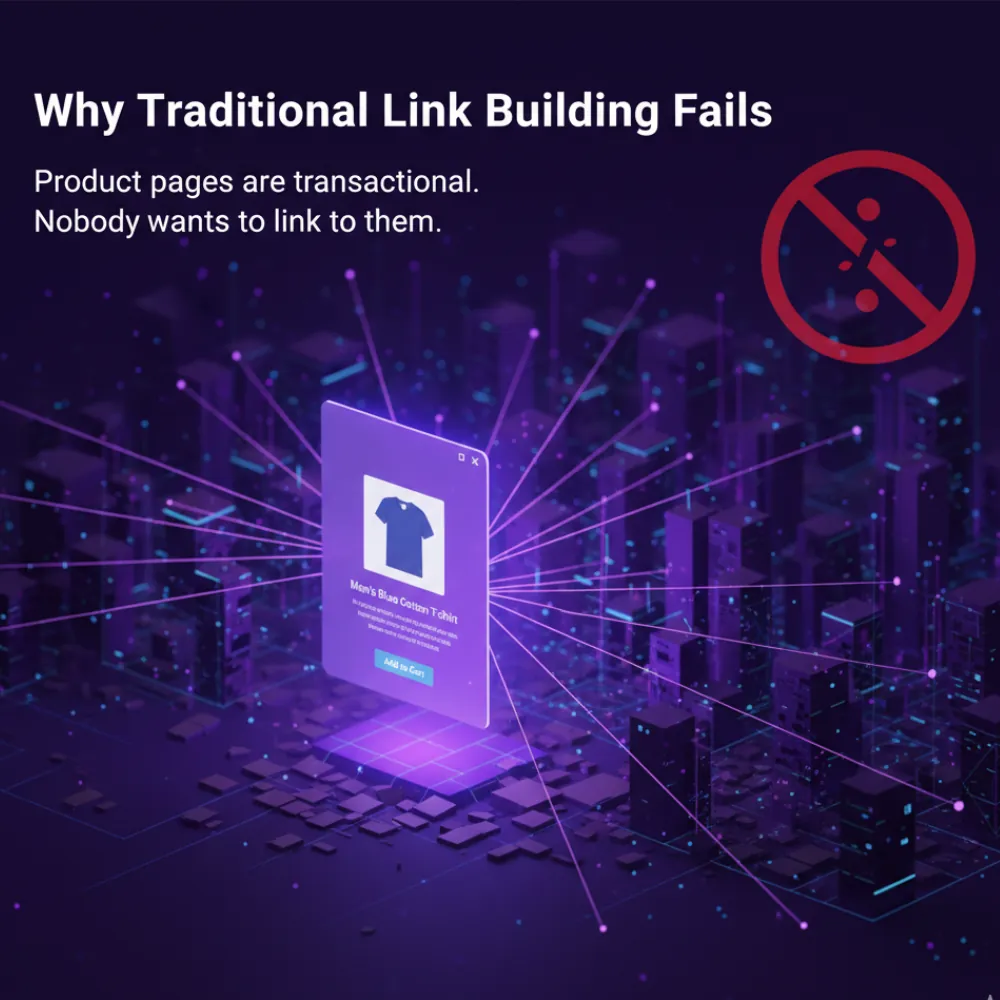
Product pages are transactional by nature. Nobody wakes up wanting to link to your “Men’s Blue Cotton T-Shirt, Size Large” page, no matter how well you optimise it. Your category pages might drive six figures in revenue, but convincing a journalist to link to your website for commercial reasons requires thinking most brands never develop.
Then there’s the seasonal inventory problem. That winter jacket you discontinued? It’s now a 404 page bleeding link equity into the void. And you’re doing all this while competing against billion-dollar corporations with dedicated SEO teams.
Most of your competition is still running on checklists they downloaded from some forum in 2019. They’re buying guest posts off Fiverr and wondering why they’re stuck on page two with 400 links pointing to low-quality content.
The brands that win treat link building as brand building. Every good link strengthens market position and brand awareness. They build relationships, create genuinely valuable content, and play long-term games instead of chasing quick wins.
The Foundation You Can’t Skip
Many eCommerce sites spend money on link building before they fix basic technical issues. These foundational elements determine whether your links build search results or disappear into nothing. Before you start any link building campaign, you need to ensure your technical foundation is solid.
Map Your Link Target Hierarchy
Stop building links to random pages. You need a strategic hierarchy that mirrors both your business priorities and how search engines distribute authority.
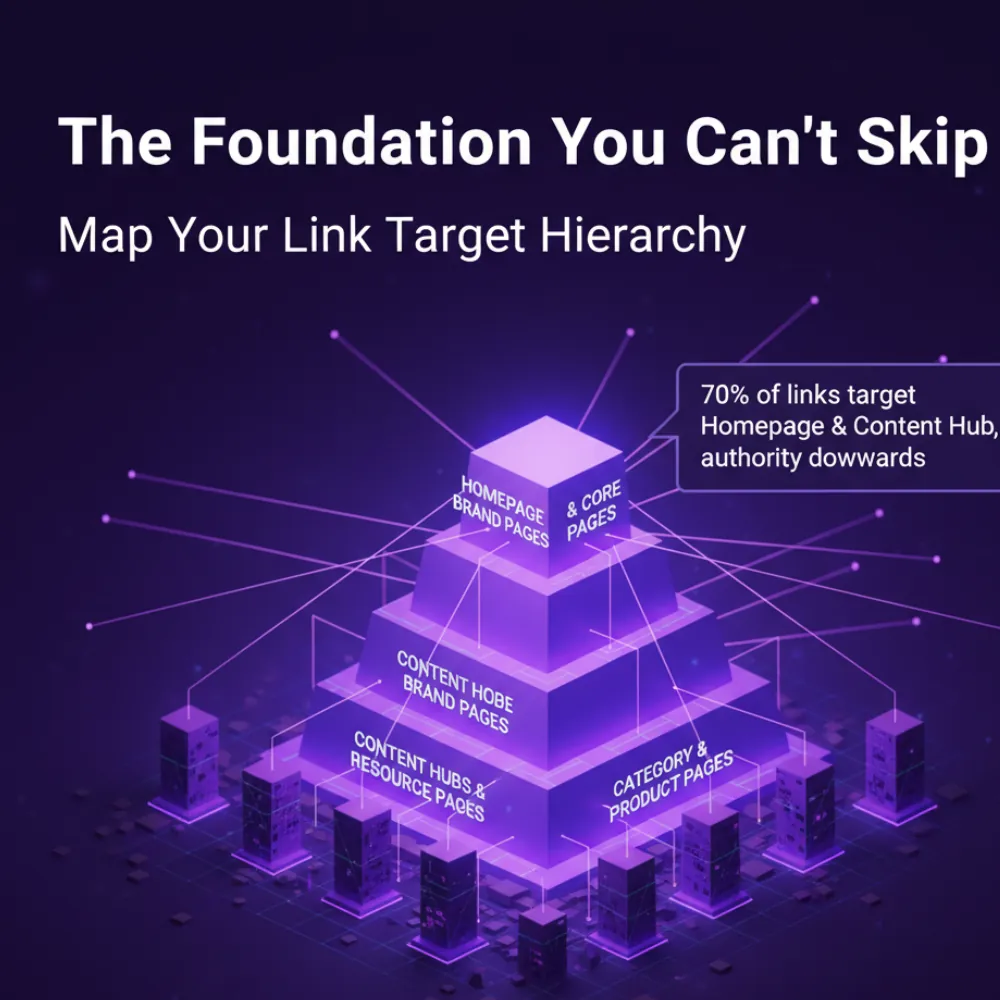
Your homepage and core brand pages get the broadest, highest-authority links. These pages distribute authority site-wide and build overall domain strength. Content hubs and resource pages come next because they attract links naturally and funnel authority to commercial pages through internal links. Your category and collection pages are the actual money makers, but most links here come indirectly through strategic internal linking from your content, plus targeted outreach.
Aim most of your links at your homepage and content resources, which then push authority down to commercial pages through optimised internal linking. This creates sustainable search results that don’t collapse when individual pages change.
Fix Your Internal Link Architecture
External links mean nothing if your internal structure is broken. Identify valuable pages with no internal links, because search engines find those pages hard to reach. Check your anchor text, because over-optimised exact match anchors look manipulative. Find every broken page that still receives internal or external links and implement proper 301 redirects.
A proper technical SEO audit will identify these issues quickly. Create 5-10 comprehensive resource pages that link out to dozens of related category and product pages. These hubs concentrate link equity and distribute it strategically.
Build Entity Authority
This is where many eCommerce brands fall short before they send their first outreach email. A consistent brand footprint across the web is the groundwork for everything else.
You need to establish your brand’s digital footprint across platforms search engines use for validation. Set up your Google Business Profile, social platforms, professional networks like Crunchbase and AngelList, and content platforms like Medium and Quora. Use identical branding across every platform with the same logo, colour scheme, and bio structure. Include consistent NAP data where relevant and link to your website from each profile, targeting specific category pages and content hubs, not just your homepage.
Build Content Worth Linking To
You can’t build sustainable link acquisition without high-quality content worth linking to. Generic blog posts your competitors already published won’t cut it. Thin product descriptions copied from manufacturers won’t either.
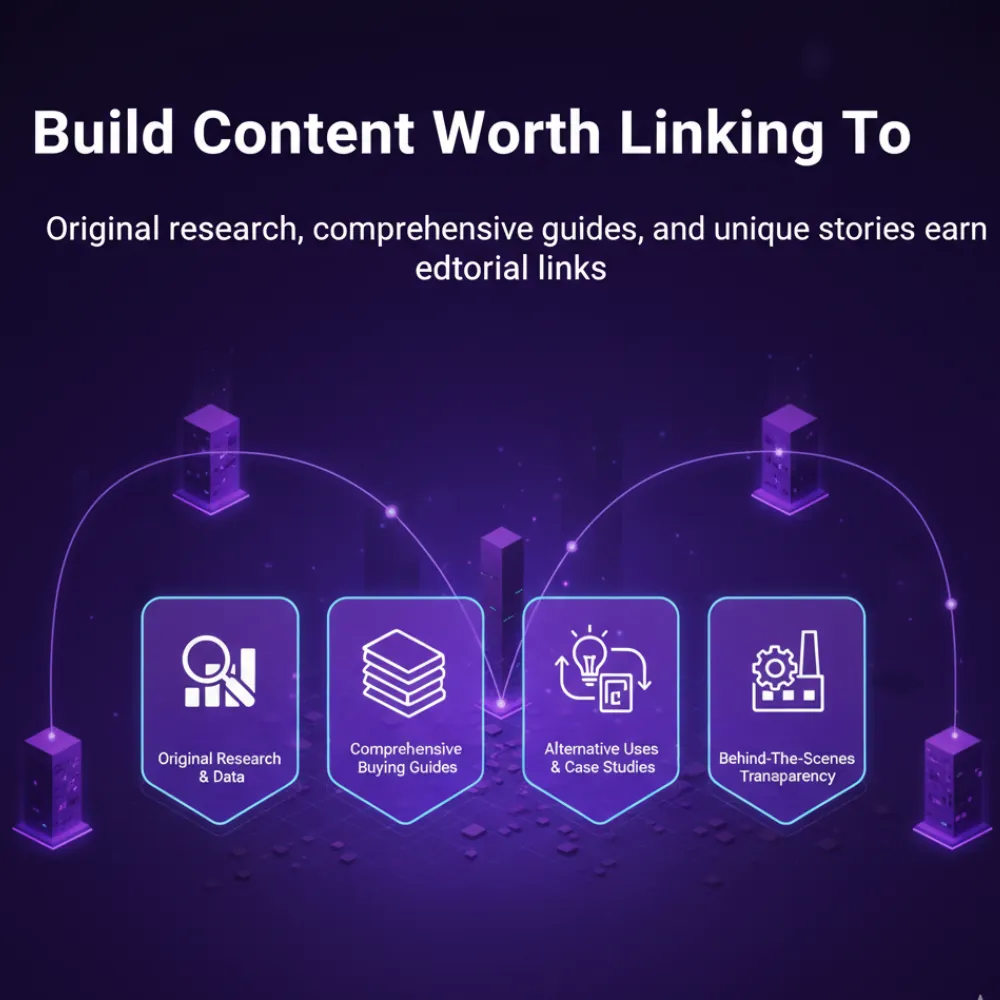
What works is original research and data like industry surveys and customer behaviour analysis. Comprehensive buying guides that go beyond basic advice. Alternative uses and case studies showing your products solving problems in unexpected ways. Behind-the-scenes transparency about your supply chain, manufacturing process, or sustainability practices.
Build five to ten of these pillar pieces before launching aggressive link building. They become your currency in outreach, the pieces of content you can pitch that actually earn editorial links. This is where content marketing meets link building strategy, and it’s the foundation that separates brands that get links from those that struggle.

How to Identify High-Value Link Opportunities
Not all links deliver equal value. A single relevant, authoritative link can be worth more than dozens of weak ones.
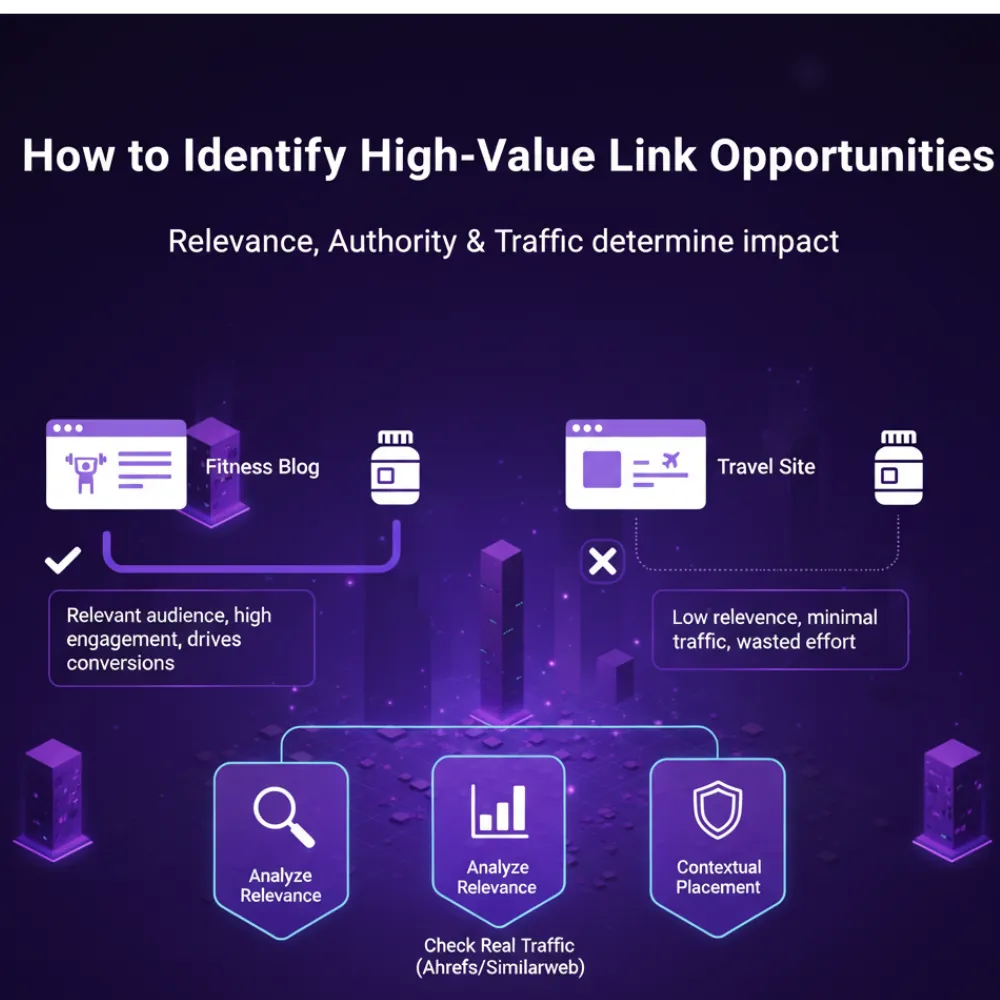
A DR40 fitness blog usually beats a DR90 travel site for your supplement brand, because relevance determines how much authority transfers and whether the link drives actual traffic and conversions. Domain Rating measures backlink profile, not visitor engagement. Use Ahrefs or Similarweb to check how much traffic the site gets.
Check that sites are selective about who they link to and maintain consistent publishing standards. Verify the target page ranks in Google before pursuing any link. Contextual links within relevant content transfer more authority than sidebar widgets or footer links.
Before pursuing any link opportunity, ask yourself: Does their audience overlap with our customer demographics? Does the site receive at least 1,000 organic visits monthly? Would their readers genuinely benefit from discovering our brand? Is the link contextual within relevant content?
Link Building Strategies That Scale for eCommerce
These tactics are ranked from easiest to implement to most complex, so you can build momentum while developing more sophisticated campaigns.
Reclaim Lost Link Equity
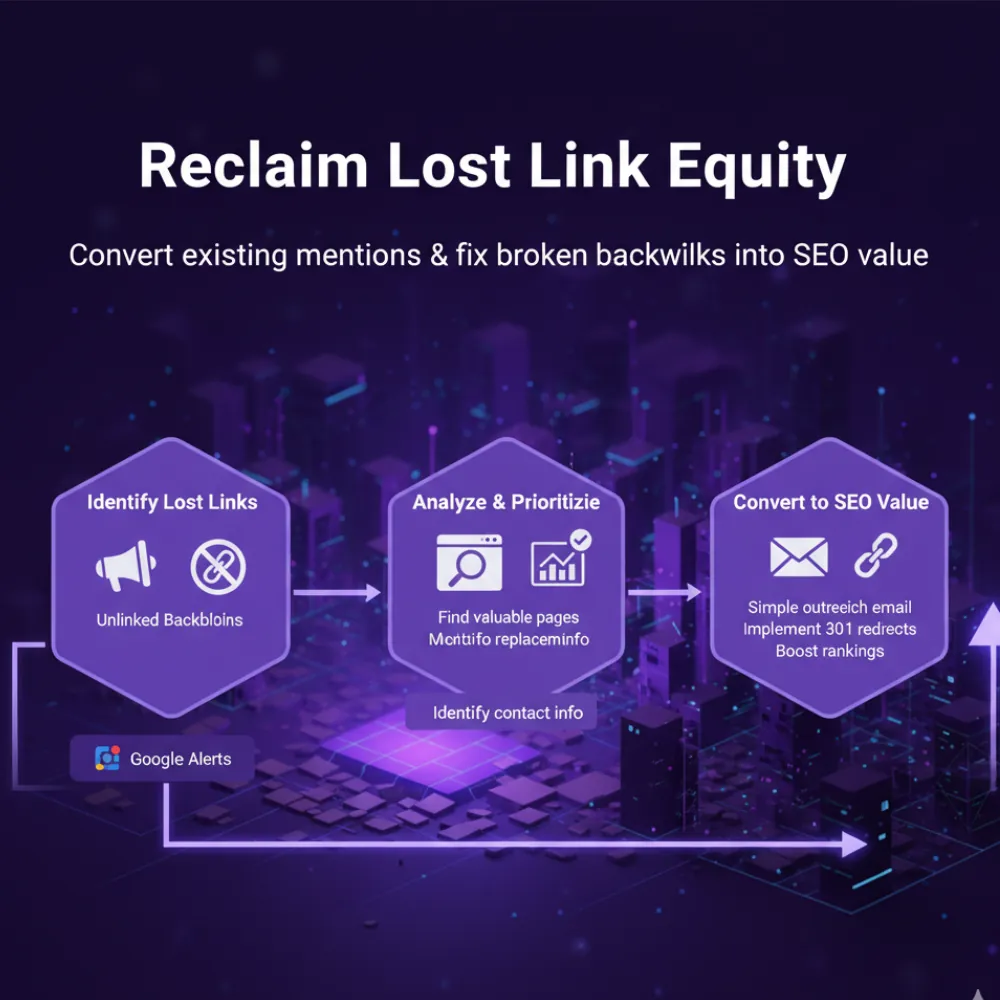
Your site is already mentioned across the web without links, and old backlinks constantly break. This is your lowest-hanging fruit because you’re converting existing awareness into SEO value.
Set up continuous monitoring using Ahrefs Alerts and Google Alerts for brand mentions. Export your broken backlinks from Ahrefs and identify which ones pointed to valuable pages. For unlinked mentions, send a simple email: “Thanks for mentioning us. Would you mind linking so your readers can find the product more easily?” For broken backlinks, identify the best replacement page and contact the webmaster with the updated URL.
Manufacturer and Supplier Partnerships
If you sell or distribute other brands’ products, you’re sitting on easy, high-authority links most competitors ignore.
Contact brands you stock and request inclusion on their “Where to Buy” or “Authorized Retailers” page. Many manufacturers keep these pages, but they often go out of date. Offer to provide your logo, business description, and location details in their preferred format to make adding you effortless. For brands you buy significant inventory from, use your purchasing relationship, because you are driving their sales.
Strategic Competitor Link Acquisition
Your competitors have already identified the link-worthy sites in your niche.
Identify three to five direct competitors ranking above you. Input their domains into Ahrefs, navigate to Backlinks, and filter for dofollow, DR 30-plus, and contextual placement. Export and categorise these links by type: roundups, reviews, resource pages, guest posts.
Reverse engineer the context. Why did they earn this link? What asset or angle did they use? Build something demonstrably better, then pitch your superior alternative.
You’re not asking for a favour. You’re offering to improve their content quality with a better resource. Frame it as solving their problem of keeping content current and valuable, not your problem of needing links.
Strategic Content Ego Bait
People link to content that features, praises, or recognises them. This psychological trigger works reliably when executed with authenticity and is one of the most effective content marketing strategies for building both links and brand awareness.
Create content like “Top industry leaders changing the game” or “Brands innovating in sustainable fashion right now.” Identify 10-20 people or brands with followings between 2,000 and 200,000. Working with an influencer in your niche can amplify your reach significantly.
Create genuinely valuable pieces of content featuring them with specific praise, not generic fluff. Reach out via their most active channel with a personalised message explaining why you included them. Don’t ask for anything in the first message. Many will link organically and share with their audience, multiplying your brand awareness.
You can use AI tools to identify targets, compile contact information, and draft personalised outreach at scale. Those tools can cut the time a prospect list takes.
Intelligent Guest Posting
Guest posting still works when it is done well. Done strategically, it can earn relevant links from high-quality sites.
Focus on genuine traffic, reader engagement, content quality standards, and topical alignment. Ignore Domain Rating as a primary metric because a DR30 site with 50,000 monthly readers usually beats a DR70 site with 500 visitors.
Pitch angles like “How we achieved specific results in this timeframe” or “Why this industry practice is broken and how to fix it.” Never link directly to category or product pages in guest posts because it looks like SEO manipulation to editors. Instead, link to your website through your most valuable content resources, which internally link to commercial pages. This keeps the link profile looking natural. If you’re building an eCommerce website, this approach is particularly effective.
Coupon and Deal Site Integration
Many SEOs overlook coupon sites, but they can still bring traffic, buyers and links.
Target platforms like RetailMeNot, CouponFollow, and Slickdeals first. Create exclusive coupon codes for each platform so you can track which sites drive actual revenue. Ensure your listing appears on indexable pages with dofollow links. Keep your offers current so the listing stays accurate.
Even if some links are nofollow, these platforms can still send real traffic and buyers, and they help your brand appear across the web.
Community and Local Partnerships
These are underutilised because the links come slower, but they’re among the highest-trust signals you can build.
Local event sponsorships can result in links from event websites, local news coverage, and partner organisations. A scholarship for students in fields related to your niche can result in .edu links from university pages. Donate products or a share of sales to aligned charities, which can earn links from .org domains and press releases.
Choose partnerships authentic to your brand values, because forced sponsorships look inauthentic. Use every partnership fully, with a sponsor page, logo placement with a link, press releases and newsletter features.
Build an Affiliate Programme as Your Link Engine
Many eCommerce brands see affiliate programmes purely as revenue channels. Smart brands recognise affiliates as an army of link builders incentivised to promote your products.
Every affiliate creates content to drive conversions, and that content includes contextual links to your site. Blog posts reviewing your products, YouTube videos with descriptions linking to your collections, comparison articles, and tutorial content. You pay nothing upfront, so you get SEO value even from affiliates who never drive a sale.
Create comprehensive affiliate onboarding that includes content suggestions and recommended target pages. Offer tiered commissions with bonuses for affiliates who create SEO-focused content.
Digital PR and Data-Driven Outreach
Original research and newsworthy data attract editorial links from high-authority publications. This is advanced content marketing that builds both search engine authority and genuine brand awareness in your industry.
Industry surveys, customer behaviour analysis, market sizing projections, and product testing with comparative results all work well. Collect data through customer surveys, sales analysis, or original studies. Identify the narrative angle and what the data shows that nobody expected.
Create a compelling visual asset like an infographic or data visualisation. Build a dedicated landing page for the research with downloadable assets. This becomes a powerful piece of content that naturally attracts links because journalists and bloggers need data to support their stories.
Pitch to journalists covering your industry and lead with the finding, not your brand. Use services like HARO where journalists request expert sources and data, then respond quickly with something relevant to earn mentions and links.
Resource Page Link Insertion
Resource pages are curated lists of tools, guides, and helpful links in specific niches. They’re specifically designed to link out, making them ideal targets.
Find opportunities using Google searches with footprints like “your niche + helpful resources” or “your topic + inurl:resources.” Check that pages are actively maintained, include at least ten external links, and link to similar resources in your niche.
Personalise meaningfully by referencing specific resources already listed that complement yours. Explain specific value: how your resource helps their audience with a specific problem, similar to existing resources they’ve listed but with clear differentiation.
Broken Link Building with Commercial Intent
Many people target the wrong broken links. For eCommerce, you need commercial intent.
Identify competitor pages that have been removed using Ahrefs’ broken backlinks report. Search for resource pages in your niche, then use tools like Check My Links to find broken outbound links on those pages.
Your replacement must genuinely serve the same purpose as the broken link. If they linked to a buyer’s guide, offer your buyer’s guide. If they reviewed a specific product type, offer that same product type.
Scaling Your Link Building Operation
Getting results from individual tactics is step one. Turning link building into a predictable, scalable system is where many brands fall down. An experienced SEO agency will already have the systems for this part.
Automate the Research Phase
Manual prospecting stops scaling after a point. Use Ahrefs and Google Sheets integration to export competitor backlinks and automatically categorise by link type. Use AI to analyse batches of URLs and extract site quality scores, contact information, and relevance ratings.
Create tiered prospect lists with high-authority sites requiring custom pitches, medium-authority sites allowing template-based outreach with personalisation, and lower-authority but high-relevance sites suitable for scaled outreach.
Systemise Your Outreach
The difference between ten links a month and 100 links a month is a system, not effort.
Create 15-20 templates covering each strategy, then customise the first paragraph. Use Airtable or Notion to track site details, contact information, outreach status, and link placement status. Schedule follow-up reminders, because many links come from a second or third follow-up, but keep the tone natural.
Track What Actually Matters
Vanity metrics kill ROI. Track links to commercial pages, rankings improvement for money keywords, organic traffic to category and product pages, and revenue attributed to SEO traffic. Build a monthly dashboard showing cost per link acquired, traffic increase, and revenue impact.
The Realistic Timeline
Link building isn’t instant gratification. The first two weeks go on foundation work, and outreach starts in the second half of the first month, with little ranking movement at first. Scaled systems come later, and ranking improvements tend to follow them. How long that takes depends on your site, your niche and the links you earn, so check progress against the tracking sheet rather than a fixed date.
Brands expecting instant results often quit before the compound effect arrives. Those that keep going often find that relationships made earlier make later placements easier.
What Not to Do
Even perfect execution of positive strategies can’t save you if you trigger algorithmic penalties. These tactics might have worked once, but search engines have evolved.
Avoid private blog networks because they’re tempting for quick results but devastating when detected. Skip bulk directory submissions because submitting to 500 directories builds red flags, not authority. Don’t participate in link exchange schemes where you trade links with unrelated sites because search engines identify these patterns easily.
Don’t overload exact match anchor text because repeatedly using “leather wallets” looks manipulative. Don’t buy links from marketplaces without vetting because random sellers typically deliver spammy placements from link farms that harm more than help.
When in doubt, ask yourself: would this link pattern occur naturally if I had never heard of SEO? If no, reconsider the approach. Focus on building high-quality links that drive real traffic and brand awareness, not just trying to manipulate search results.
The Future of Link Building
Search is changing, and links are one signal among several.
Google’s guidance on E-E-A-T applies to shops too, so show who runs the business, what customers say and what your policies are.
Prepare by investing in brand building and in content that a generic AI draft cannot match. Develop topical authority in your core categories before expanding.
Technical factors like website speed are part of Google’s page experience signals, so ensure your site loads quickly while you’re building your link profile.
Your 90-Day Action Plan
Theory means nothing without execution.
Days 1 to 14 focus on foundation. Audit internal link structure, map your link target hierarchy, set up your entity stack, and install tracking. Complete 80% of entity stack profiles and implement Schema markup.
Days 15 to 30 launch initial outreach. Start link reclamation, contact manufacturers, begin competitor backlink analysis, and create your first ego bait content piece. Submit to tier-one coupon sites and identify 20 target sites for guest posting.
Days 31 to 60 scale and systemise. Send 50 guest post pitches, pursue top competitor link opportunities, create your outreach tracking system, and launch or optimise your affiliate program.
Days 61 to 90 optimise and expand. Analyse what tactics produced the best ROI and double down on them. Build outreach templates for successful tactics and set up monthly reporting to track key metrics.
By day 90, you should have a working outreach system and a tracking sheet that shows which tactics earn links.

The Compound Effect
Many brands treat link building as an ongoing expense. A better model is an asset that gains value over time.
Early work asks the most relative to what it returns. Later, relationships built earlier make new links easier to win, and a few links can arrive without outreach once people know the brand. The timing depends on the niche and the effort, so judge it on the monthly dashboard.
The compound effect only helps brands that keep going through the early phase. Brands that see link building as brand building keep going, because every good link strengthens their position. Brands that treat it as a ranking trick quit when the trick stops working.
Few eCommerce brands will stick with a system like this. It asks for strategic thinking beyond quick wins, steady execution over a long period, investment before the returns show, and relationships built rather than links chased quickly. That is the advantage.
Easy tactics get copied and lose their value. Hard ones that few people execute well last longer.
Start with the foundation, run the 90-day plan, then track what came of it and adjust.

Want help putting this in place? Tell us about your store and what you have tried so far, and we will talk through what to do next. No obligation.